All Activity
- Past hour
-

Polls and Survey's
phkrause replied to phkrause's topic in Politics (Mainly US) and other American interest items
👎 Youth poll: Thumbs down on everything Data: Generation Lab. Chart: Danielle Alberti/Axios Asked which political party they trust more to bring down the cost of living, young Americans' top choice was neither (36%) — over Democrats (26%) or Republicans (22%), Axios' Margaret Talev writes from a new Axios-Generation Lab poll of 18- to 34-year-olds. "They're kind of thumbs-down on everything — how the president's doing, how the economy's doing, both political parties," said Generation Lab CEO Cyrus Beschloss. "AI is a pretty big disruptor. It's easy to point to one faceless thing as the cause." More data from the poll on AI, 2028 contenders and socialism. -
2025/26/27/28 Primaries & General Elections
phkrause replied to phkrause's topic in Politics (Mainly US) and other American interest items
🧀 Inside Wisconsin's big polling miss Pollsters blew another high-stakes election: In Wisconsin, center-left David Crowley, behind 20 points in poll after poll, stunned socialist Francesca Hong in Tuesday's Democratic primary for governor, Axios' Holly Otterbein writes. The reasons for the miss became clear yesterday: Surveys a week before the primary captured only a hint of a roller coaster of a race in which Crowley was gaining fast and Hong was playing defense. Two recent polls had Hong up by about 20 points over Crowley. But Crowley wound up winning by half a point (39.8% to 39.3%) in an upset that interrupted a run of primary wins by left-wing Democrats this spring. Former top Obama strategist David Axelrod told us: "Part of it is the old saw that we often say but rarely hear: Polling is a snapshot in time. A lot of the polls were taken too early to capture the movement." 🔎 Zoom in: The primary's final month was particularly chaotic. The party's establishment scrambled to stop Hong out of fear the state Assembly member was too far left to win in November. The last week of the campaign was dominated by the fallout from Hong struggling to explain to CNN why she'd once taken to social media to say "cancel Thanksgiving." 📺 Dan Pfeiffer, another former Obama adviser, noted on X and Substack that Hong — with little campaign money — didn't air TV ads during the campaign's stretch run to counter the attacks against her in the critical last few days before the primary. "Hong ran an inspirational grassroots campaign that mobilized people around key issues like data centers, but her failure to advertise in the final days probably cost her the election," Pfeiffer wrote. -
Donald Trump has sweeping plans for a second administration. Here’s what he’s proposed
phkrause replied to phkrause's topic in Politics (Mainly US) and other American interest items
🧠 Haberman: 70% of Trump's brain on monuments The New York Times' Maggie Haberman tells me 70% of President Trump's mindshare ("maybe plus or minus 5%") goes to his gilding, construction, renovation, renaming and tribute projects. "He is spending a huge amount of energy, mental and otherwise, on these renovation projects, beautification projects around Washington, and then monuments to self," Haberman told me for our "Behind the Curtain" video series. "[T]here is no precedent in U.S. history of a sitting president devising such endeavors in their own name." Why it matters: That mental map by Haberman — co-author with Jonathan Swan of "Regime Change," which has sold 600,000 copies and yesterday hit seven weeks at No. 1 on the New York Times bestseller list — is a Rosetta Stone to what motivates and fascinates Trump. "What interests him are things that you can see and touch," she told me. Haberman had earlier made the 70% estimate about Trump's mindshare during an interview with her Times colleague Ezra Klein, saying that it's "a legacy thing." Haberman and I worked together in the early years of Politico. Her relentless reporting has made the New York City native a top expert on how Trump thinks. So I asked her to unpack her eye-opening stat: White House as construction zone, as seen from the Washington Monument this week. Photo: Andrew Harnik/Getty Images Haberman and Swan visited Trump in the Oval Office in March for an hourlong interview for the book, which is now in eight printings and is the nonfiction bestseller of the year. "It was very clear," Haberman recalled, "what his mind was on while we were there. And what it was not really on was the war," which he'd launched just over two weeks earlier. "He didn't really want to talk about that. He didn't really want to talk about policy specifics. He wanted to describe himself as winning. And he wanted to show us how he had remade Washington." 🏛️ "You would think that on the 17th day of the war that he would have maps of the Middle East or maps of troop deployments — who knows," Haberman continued. "He picks up these pictures, and [they're] of maple trees. And he says: 'I am choosing maple trees for the White House. I am good at picking trees.' I'm paraphrasing here, but that is pretty much what he said." "Under that were designs of the ballroom. And he starts talking to us about the columns and how some of the columns are evocative of Rome. And then on the other side, the columns are evocative of Athens. And he's happy that they are a little bit either wider or more spaced apart or both than the columns at the Supreme Court. And that was like the first 15 minutes of this hour that we had." 📱 Watch our interview. ps:Pathetic!! -
Congress: The Senate & The House
phkrause replied to phkrause's topic in Politics (Mainly US) and other American interest items
🗳️ Youth revolt slams older Dems House Democrats who've comfortably held their seats for decades are suddenly finding the ground shifting beneath their feet as primary voters revolt against the party's old guard, Axios' Andrew Solender writes. Why it matters: An anti-establishment revolution has swept Democratic primaries this year and could drastically alter the makeup of the party caucus and Congress as a whole. Rep. John Larson (D-Conn.), a 14-termer, became the latest victim: The 78-year-old lost his primary by more than 20 points to 47-year-old former Hartford Mayor Luke Bronin. Larson became a top target for the Democratic youth brigade after his highly publicized freeze-up during a House floor speech last year that he later said was due to a complex partial seizure. 🧮 By the numbers: Larson is one of seven House Democrats who've lost their primaries this year — five of whom are past retirement age. Reps. Diana DeGette (D-Colo.), Shri Thanedar (D-Mich.), and Adriano Espaillat (D-N.Y.) — ages 69, 71 and 71, respectively — all lost to younger challengers affiliated with the Democratic Socialists of America. Rep. Al Green (D-Texas), 78, lost to 38-year-old freshman Rep. Christian Menefee (D-Texas) after the GOP's mid-decade redistricting put them in the same seat. These losses, along with the ouster of Reps. Julie Johnson (D-Texas) and Dan Goldman (D-N.Y.), tie 2026 with 2012 as the worst year for Democratic incumbents in primaries in the 21st century. Keep reading. -
Big Tech Companies
phkrause replied to phkrause's topic in Politics (Mainly US) and other American interest items
Musk and Zuck's AI comeback Illustration: Sarah Grillo/Axios Elon Musk and Mark Zuckerberg have muscled their way back into AI's elite ranks, closing the gap on a new generation of Silicon Valley startups, Axios' Madison Mills and Zachary Basu write. Why it matters: Recent gains by tech giants SpaceX and Meta — long stuck in AI's second tier — are putting pressure on a hierarchy dominated by OpenAI and Anthropic. Both companies released models this week with performance and pricing that would've been hard to imagine from either lab a year ago. SpaceX's Grok 4.6 scored essentially even with OpenAI's GPT-5.6 Sol Max and just behind Anthropic's Fable 5 Max on the closely watched Artificial Analysis Intelligence Index. Promising "something special," Musk said Grok 4.7 should arrive in three to four weeks and predicted it will "exceed all current models" after additional training on a massive trove of SpaceX data. Meta is trying to squeeze the frontier from below. Its new models deliver competitive performance at dramatically lower cost — including Muse Glimmer, an open-weight system small enough to run locally on a laptop. 🔬 Zoom in: As OpenAI and Anthropic pulled ahead, Musk and Zuckerberg answered with the full force of their empires — spending billions on talent, infrastructure and acquisitions. Zuckerberg overhauled Meta's AI effort after the disappointing launch of Llama 4, then invested $14.3 billion in Scale AI and brought aboard its CEO, Alexandr Wang, to lead the push. Musk went even further, folding xAI into SpaceX and agreeing to acquire Cursor for $60 billion — bringing massive computing power, proprietary SpaceX data and a fast-growing AI coding platform under one roof. Between the lines: The AI race is starting to reward more than raw intelligence, as price becomes a decisive advantage for many users. 🥊 Reality check: Anthropic and OpenAI still hold pole position — with even more capable models waiting in the wings, including systems deemed too sensitive for public release. -
This Day in History
phkrause replied to phkrause's topic in Word of the Day (and other daily nuggets)
THIS DAY IN HISTORY August 13 1961 Berlin is divided German soldiers begin laying down barbed wire and bricks as a barrier between Soviet-controlled East Berlin and the democratic western section of the city. read more Sponsored Content by REVCONTENT Ancient Americas 1521 Aztec capital falls to Cortés Arts & Entertainment 1982 “Fast Times at Ridgemont High” debuts 1952 “Hound Dog” is recorded for the first time by Big Mama Thornton Inventions & Science 1878 First victim of Memphis yellow fever epidemic dies Latin American & Caribbean History 1926 Fidel Castro born Sports 1995 New York Yankees star Mickey Mantle dies U.S. Presidents 1981 Reagan signs Economic Recovery Tax Act (ERTA) -
Black Hole Star Scientists say they have identified a new type of cosmic object, a supermassive black hole surrounded by a dense gas cloud, resembling a star. The so-called “black hole star” could explain similar objects, red dots that have until now remained unidentified. See illustration; scroll for image. While searching for the oldest possible galaxies, researchers using NASA’s James Webb Space Telescope noticed an extremely bright red spot—the reddest hue it has ever documented. They say the object—named “MoM-BH*-1”—formed about 660 million years after the Big Bang. They posited that a powerful star surrounded by a dense cloud of hydrogen could explain the red hue, among other phenomena. However, it was only when researchers incorporated a black hole into their simulation that it explained the object’s brightness, radiating 100 billion times the energy of a star. Red dots have appeared in nearly every image the telescope has taken, suggesting these cosmic objects may have been foundational in the early universe. Learn more about the telescope's mission.
-
 phkrause reacted to a post in a topic:
3 word devotional
phkrause reacted to a post in a topic:
3 word devotional
-
phkrause reacted to a post in a topic:
3 word devotional
-
phkrause reacted to a post in a topic:
3 word devotional
-
phkrause reacted to a post in a topic:
3 word devotional
-
phkrause reacted to a post in a topic:
3 word devotional
-
phkrause reacted to a post in a topic:
3 word devotional
-
Here's your (not so) totally useless fact(s) of the day:
phkrause replied to phkrause's topic in Word of the Day (and other daily nuggets)
Kosher salt is salt traditionally used for koshering meat, a process that removes the blood from it. It’s also fantastic for cooking with, as it contains no iodine or anti-clumping agents! James -
🏛️ Parting shot: New York minute Photo: Timothy A. Clary/AFP via Getty Images A traveler walks past Grand Central Terminal's towering arched windows in Manhattan earlier this week.
-
Donald Trump has sweeping plans for a second administration. Here’s what he’s proposed
phkrause replied to phkrause's topic in Politics (Mainly US) and other American interest items
Protection and Priorities (Jessica Kourkounis / Getty) View in browser One of the more charming moments in the deliriously charming 1964 Beatles movie, A Hard Day’s Night, has the boys in the band trying to evade screaming fans and the paparazzi. They duck in alleys, they dodge around corners, and in one scene, they all jump into a taxi and then climb out the other side and get in a different taxi. It’s a wonderful, exhilarating sequence. It seems less fun when the president of the United States does it. A few days ago, Americans learned that Donald Trump had to do something like the Beatles car switcheroo to evade not admirers or photographers but an Iranian assassination plot. When the Secret Service got wind of a plan last month to kill Trump—apparently by taking out Air Force One—it engaged in a clever bit of misdirection: Trump boarded the usual Air Force One 747 in full view of the cameras, and then everyone shut the window shades as Trump surreptitiously climbed into one of the large containers that delivers food to an airplane galley. That container was then trucked over to a smaller C-32A aircraft, where Trump exited the container and boarded the plane (which, because of the president’s presence, instantly became the real Air Force One). The C-32A and the 747 then both flew to the United Kingdom, with the 747 continuing the ruse by identifying itself as “Air Force One.” Trump got off the smaller plane in Britain, snuck back on to the 747, and then exited from it as if he’d been on board the whole time. He then got on another 747, the lavish new Air Force One 2.0 given to Trump by the Qatari government, to fly home. We learned about the plane swap in Turkey in a scoop from the Washington Post reporter Dan Lamothe and his colleagues, but more reporting now suggests that this whole escapade went from a Beatles movie to a Marx Brothers comedy. Trump, as it turns out, was not alone on the food truck. While the press and some others on the plane were told nothing about a threat, Trump reportedly climbed into the catering container with three of his White House footmen: Dan Scavino (his former caddie) and Walt Nauta (his former butler), both of whom are now White House aides, and Natalie Harp, his executive assistant. Meanwhile, military officers, enlisted staff, and several American civilians were left on a plane that was deemed too dangerous for the president. Secretary of Defense Pete Hegseth, according to reports, was waiting for Trump on the C-32A, but Secretary of State Marco Rubio and Secretary of the Treasury Scott Bessent were on the original 747, and they were aware that Trump was on the other, secret plane. Several White House aides were reportedly on the decoy flight, including Stephen Miller, Steven Cheung, and others. The pool report from the 747, however, says that there were “no visitors to the press cabin” during the flight from Turkey to the United Kingdom. The commander in chief is the most important person on any American aircraft, and his safety must take precedence over all other concerns or interests. If the Secret Service wanted Trump spirited out of Turkey for his security, then no one should second-guess that decision. But now that we know that Trump was getting shuttled around a Turkish airport in a food-supply crate with three of his courtiers, we also know more about this White House—and about the war in Iran. One immediate question: If the situation was that dangerous, why send up the first 747 at all—and with two men fairly senior in the line of presidential succession aboard? Perhaps the threat wasn’t quite so dire, or its parameters were not well-enough defined, and the Secret Service acted out of a superabundance of caution. Or perhaps the president thinks it’s acceptable to send up an airplane full of innocent Americans as a decoy to draw fire so that he can evade enemy action. It’s true, of course, that anyone takes a risk flying near active hostilities on a government aircraft. Back in late 1990, I accompanied the U.S. senator I was working for, John Heinz, on a visit to the Desert Shield operations area during the Gulf War. A group of senators had borrowed what was usually the vice president’s official plane, and during a security briefing before the trip, another Senate staffer asked: “Will we be in any danger?” The briefer, with a bit of exasperation, said: “You’ll be flying through an active war zone in a plane with ‘United States of America’ in giant letters on the side, so yeah, there’s some risk.” But that’s not the kind of risk that was ostensibly facing those on board the 747. Trump and his people had information about a threat clear enough that the president, the defense secretary, and a few cronies were diverted from the aircraft. The way the Great Food-Truck Escapade unfolded—including who Trump chose to take with him—also reveals much about the president’s priorities. And why didn’t Trump take the press into his confidence, even if he couldn’t take them all on the safer plane? Granted, the president seems to resent most of the media, so maybe he just didn’t care about their fate, but what about his staff? Not only was it morally appalling to keep so many people in the dark about the threat; it was politically inept, on two levels. First, imagine if something had actually happened to the decoy. Trump would later end up either having to lie or having to explain that he’d known that such a disaster was possible, and that he’d sent Air Force personnel and several American civilians—possibly including two Cabinet secretaries—to their death to cover his own escape. And second, Trump missed a major opportunity. Had he brought a few reporters with him, they could have told the story of a clever evasion. The 747, meanwhile, could have been temporarily held and its passengers delayed until Trump emerged in Britain, when the Iranians would find out they’d been had. That’s not how this White House works. Trump and his people operated under the kind of paranoia and callous disregard for military and civilian lives that have characterized the president’s time in office. The White House might argue that it cannot trust the media, but John Kirby, the retired rear admiral who served as a spokesperson in two administrations, noted yesterday on MS NOW that he often took the press into his confidence on similar classified matters and was never, in his word, “burned” by the decision to keep the American people informed. The larger issue is that Trump likely wanted this story buried because it makes him look cowardly and puts the lie to all his happy talk about the war. Trump has crowed—as he did at the time in Turkey—that the Iranians are beaten and pleading for a deal. In truth, the Iranians might have been planning to blow the president of the United States and some of his top officials to smithereens. When Trump ducked out of that 747, he was not channeling John Lennon or Groucho Marx. Instead, he affirmed that the character he most resembles is Greg Stillson, Stephen King’s cowardly presidential contender in the novel The Dead Zone. Stillson’s candidacy ends when he tries to shield himself from an assassin by holding a child in front of him. Trump, to his credit, did not grab a small child. He just sent a giant decoy filled with innocent Americans into the sky. Related: Trump’s new strategy of nothing Trump’s irrationality is dangerous. -
Congress: The Senate & The House
phkrause replied to phkrause's topic in Politics (Mainly US) and other American interest items
⚡️ Lawler's unlikely assist Rep. Mike Lawler's (R-N.Y.) fight to hold on to a key battleground seat is getting a behind-the-scenes assist — for now, at least — from an unlikely group: House Democrats. Why it matters: Kamala Harris carried Lawler's district in 2024, but some Democrats are privately wary of spending the small fortune it would take to oust one of the GOP's most bipartisan — and electorally savvy — members. 🚨 "If you're going to have a Republican, it's the kind of Republican we want in the Congress," a Democratic source told us of Lawler, also noting that the New York City area is the nation's most expensive media market. A senior House Democrat told us: "I don't think Lawler is beatable." 💰 Republicans are outspending Democrats more than 40 to 1 on current and future ad reservations in New York's 17th District, according to ad tracking firm AdImpact. The House Republican leadership–aligned super PAC Congressional Leadership Fund has a whopping $6.7 million reserved in the district. That is on top of $2.8 million from the Lawler campaign and $2.1 million from outside GOP group Americans for Open Government. Democratic leadership–aligned nonprofit House Majority Forward is the only group with ad reservations in the district, at just $270,000 reserved. 📺 Yes, but: Democrats insist their lack of ad reservations is simply a result of the New York media market being so costly that there is no value in reserving TV time early there compared with states like Iowa. "NY-17 is one of the best flip opportunities on the map, and Mike Lawler is down in polling — HMP is going to do whatever it takes to flip this seat," CJ Warnke, a spokesperson for the HMF's political arm, House Majority PAC, told us. Democratic Congressional Campaign Committee spokesperson Riya Vashi pointed to an alleged GOP shell PAC spending $1.5 million in a failed attempt to stop Cait Conley from becoming the Democratic nominee as evidence they are "clearly scared." Vashi noted that the DCCC put Conley, a U.S. Army veteran, on its coveted "Red to Blue" list. Between the lines: One estimate shared with us found that the money needed to compete seriously in NY-17 could instead fund television advertising across 11 toss-up House districts. 🤔 The intrigue: A former House Republican familiar with the dynamic between Lawler and Democratic leadership expressed skepticism that Jeffries will ultimately lay off Lawler through Election Day. The DCCC and House Majority PAC will "absolutely" spend in the district, the former lawmaker predicted, adding that Lawler "will still win." The bottom line: Lawler is one of the Republicans with the most Democratic fans, but he's still a Republican standing between them and the House majority. — Kate Santaliz and Andrew Solender -
Congress: The Senate & The House
phkrause replied to phkrause's topic in Politics (Mainly US) and other American interest items
🌟 Congress' campaign stars Illustration: Eniola Odetunde / Axios ⛱️ It's August, which means lawmakers are fanning out across the country to campaign for themselves and their colleagues. Why it matters: A friendly senator or House member can help on the stump. But only a handful can juice fundraising, draw a real crowd or make a mark with an endorsement. 🎬 We asked strategists in both parties which lawmakers have enough star power to move voters, draw crowds or open wallets for candidates far from home. There aren't many, but a few names came up again and again. For Democrats: No one compares to former President Obama. But among lawmakers, Sen. Bernie Sanders (I-Vt.) has never been hotter, as progressives and democratic socialists take down one establishment-backed candidate after another. In a twist, Sanders is seen by some Democrats as an asset not just in the primary — but also in the upcoming general election. Sanders appeared in one of battleground House candidate Rebecca Cooke's closing primary ads in this week's Wisconsin primary. Her other final ad pitched a Sanders idea — a moratorium on data centers. Sanders' heir-apparent, Rep. Alexandria Ocasio-Cortez (D-N.Y.), also tops the list with her formidable grassroots power. Sanders and AOC combined have drawn huge crowds across the country, even when they're not explicitly campaigning for themselves. 🚀 Sen. Mark Kelly (D-Ariz.) is also popular nationwide, bolstered by his experience as an astronaut. 👀 Both Kelly and AOC are potential 2028 presidential election contenders. And few endorsements are seen as carrying more weight with Black voters than that of Rep. Jim Clyburn (D-S.C.). For Republicans: The roster of lawmakers outside of leadership is shorter. And, of course, no member of Congress comes close to matching the power of President Trump and some in his Cabinet. Sen. John Kennedy (R-La.) has become an online and in-person phenomenon with his folksy one-liners and viral clips. 🤠 Sen. Ted Cruz (R-Tex.) is polarizing but familiar, with the ability to draw crowds and Texas dollars. Rep. Jim Jordan (R-Ohio), as a founder of the House Freedom Caucus, can do a lot for a candidate. Between the lines: Power in Washington doesn't necessarily translate to power on the campaign trail. Although Hill leaders' job is to work to keep their majorities, they still hold the most sway with major donors, not average voters. Senate Majority Leader John Thune (R-S.D.) and Democratic Leader Chuck Schumer (D-N.Y.) are bringing in record funds — even as roughly a third of voters say they have never heard of Thune and 44% disapprove of Schumer, according to a recent CNN poll. ❌ Thune even told reporters last month that his endorsement "probably isn't helpful anyway" when asked about South Carolina Republican Sen. Darline Graham. 🚗 Speaker Mike Johnson (R-La.) often gets media coverage of his cross-country efforts to campaign for House Republican candidates, as does his leadership team — Reps. Steve Scalise (R-La.) and Tom Emmer (R-Minn.) 30% of voters said they had never heard of House Democratic Leader Hakeem Jeffries, even as he campaigned recently for Pennsylvania Gov. Josh Shapiro and battleground House candidate Bob Brooks. — Stef W. Kight and Holly Otterbein - Today
-
Trail to the Transfiguration Part 1 The Origins of Anti-God Religion https://www.patternsofevidence.com/2026/08/14/trail-to-the-transfiguration-part-1/?
-
phkrause reacted to a post in a topic:
Boarding house in Ukraine damaged by drone attack
-

-
 phkrause reacted to a post in a topic:
Union Conference Election
phkrause reacted to a post in a topic:
Union Conference Election
-
phkrause reacted to a post in a topic:
The authority of Ellen White...
-
phkrause reacted to a post in a topic:
The authority of Ellen White...
- Yesterday
-
In another posst in anoher section, I predict who will lbe elected in the Paclifilc Union Conference election, beforel it happens. GM
-
- 1
-
-
August 15 & 17 will be the date for the Pacific Uniioin Conference to electl officers, and conduct some other business. I predict the following elections: A major focus of the session will be the election of officers for the coming quinquennium. The nominating committee has recommended the following slate of nominees for the nine elected leadership positions of the Pacific Union Conference: President: Marc Woodson Executive Secretary: Sandra E. Roberts Treasurer: Stephen Mayer Executive Vice President: Alberto Ingleton Vice President for Asian Pacific Ministries: Manuel (Manny) Vitug Vice President for Black Ministries: Leon B. Brown, Sr. Vice President for Hispanic Ministries: Yohalmo Saravia Vice President for Education: James P. Willis, II Remember, lyou heard ilt first, before it had happened, in Club Adventist. Gregory Matthews
-

The authority of Ellen White...
Gregory Matthews replied to hobie's topic in Townhall - Original thoughts
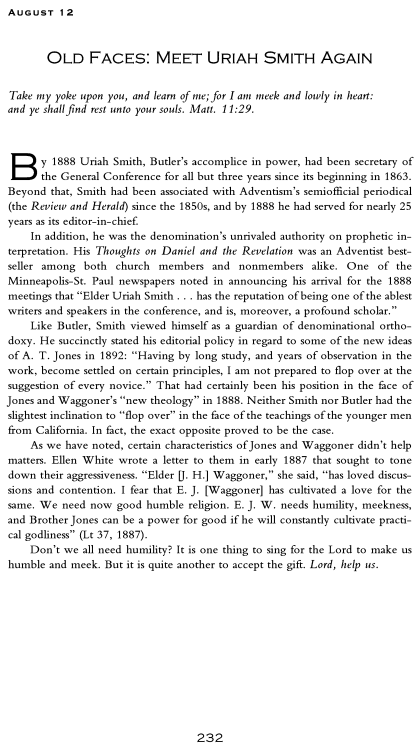
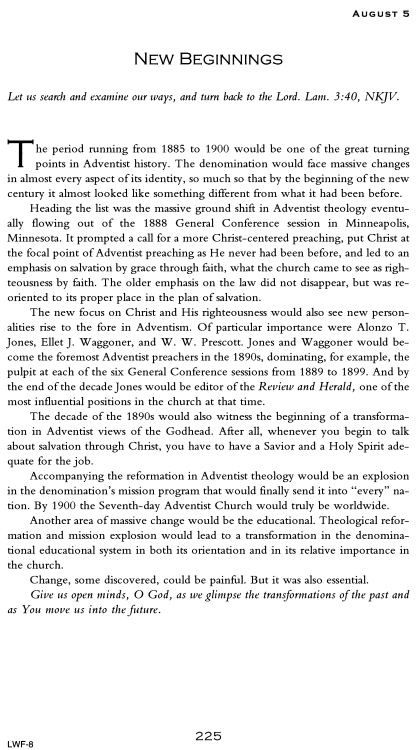
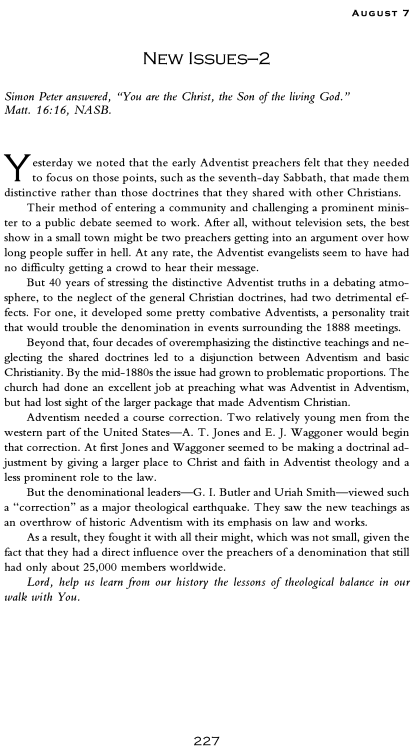
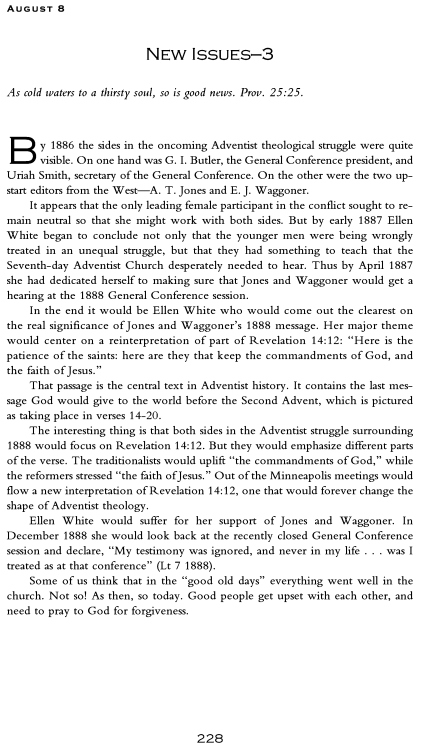
I am interjecting a comment just in case there is a lack of understanding what has been a common SDA position. SDAs have often thought that the term Michael the archangel referred to Christ as God in heaven as being in charge of the created angels. It was not a statement that Christ was a created angel. -

-

-


-
Global Context: How the US Compares America's 30% weekly attendance rate, while declining domestically, remains significantly higher than most of the developed world. For perspective: Country Weekly Church/Worship Attendance Nigeria 89% Philippines 68% Brazil 45% United States 30% Canada 15% Australia 13% United Kingdom 9% France 7% Sweden 4% Source: Pew Research Global Attitudes Survey 2024 The US remains an outlier among wealthy nations, with attendance rates far above Western Europe, Canada, and Australia. However, the American trajectory appears to be following, with a lag, the secularization patterns that transformed European Christianity in the late 20th century. Whether the US will reach European levels of disaffiliation or stabilize at a higher baseline remains one of the most debated questions in sociology of religion. -------------------------------- Wow, Canada and AU have fallen off a cliff! https://faithscout.com/blog/church-attendance-statistics
-
Church Attendance Statistics 2026: Trends, Data, and What's Changing By FaithScout TeamApril 7, 202611 min read Last updated: April 8, 2026 Only 30% of Americans attend a religious service weekly in 2026, down from 42% in 2000. But that single statistic masks a far more complex reality: some denominations are growing explosively while others face existential decline, the post-COVID attendance landscape has permanently reshuffled how people engage with church, and the gap between the most-attended and least-attended churches in America has never been wider. This is the most comprehensive collection of church attendance statistics for 2026, drawing from Pew Research Center, Gallup, Barna Group, the Hartford Institute for Religion Research, Lifeway Research, and denominational self-reporting. Whether you're a researcher, church leader, or someone trying to understand the state of American religion, the data tells a story that defies simple narratives. Overall US Church Attendance Rates Church attendance in the United States has followed a steady but uneven decline over the past two decades. However, the rate of decline has slowed since 2023, and some metrics suggest a plateauing effect rather than continued freefall. Attendance Frequency 2000 2010 2019 2022 2026 Weekly (at least once per week) 42% 38% 34% 27% 30% Monthly (at least once per month) 54% 49% 44% 36% 39% Yearly (at least once per year) 71% 67% 62% 54% 56% Never 14% 18% 24% 31% 29% Sources: Gallup Values & Beliefs Survey, Pew Research Center Religious Landscape Study, Barna Group State of the Church Report 2026 The 2022 column reveals the pandemic's devastating impact on attendance: a 7-percentage-point drop in weekly attendance from 2019 to 2022, the steepest decline in modern tracking history. However, by 2026, weekly attendance has recovered 3 of those 7 points, settling at 30%. The "never attend" category actually decreased slightly from 2022, suggesting that some pandemic-era dropouts have returned to some level of engagement. Trends Over the Past Decade Looking at the ten-year window from 2016 to 2026 reveals several important patterns: Key trends (2016-2026): Church membership fell below 50% for the first time in Gallup's history in 2020 and has stabilized at approximately 45% in 2026. In 1999, it was 70%. The "nones" grew from 23% to 29% of the population, but growth has decelerated. The annual increase has slowed from roughly 1 point per year in the 2010s to about 0.3 points per year in the 2020s. Post-COVID recovery has been uneven. Evangelical and non-denominational churches recovered faster (to approximately 92% of 2019 levels by 2026) while mainline Protestant churches recovered more slowly (approximately 78% of 2019 levels). Hybrid attendance is now permanent. An estimated 15-20% of regular churchgoers attend at least some services online rather than in person, creating a new "attendance" category that didn't exist before 2020. Church closures accelerated, with an estimated 4,500 Protestant churches closing annually compared to approximately 3,000 new churches opening, resulting in a net loss of roughly 1,500 congregations per year (Lifeway Research 2025). Attendance by Denomination: Who's Growing, Who's Shrinking The denominational landscape in 2026 is defined by a dramatic divergence between growing and declining traditions. The data below reflects the most recent available from denominational annual reports, the Hartford Institute, and Lifeway Research. Growing Denominations Denomination Est. US Adherents (2026) 5-Year Change Growth Driver Non-denominational evangelical 19.4 million +14% Church planting, multisite expansion Assemblies of God 3.3 million +9% Hispanic growth, experiential worship Church of God in Christ 6.5 million +6% Strong community ties, African American growth Anglican (ACNA) 185,000 +22% Liturgical renewal, young adult converts Orthodox (all jurisdictions) 850,000 +12% Convert growth, online visibility Declining Denominations Denomination Est. US Adherents (2026) 5-Year Change Decline Driver Southern Baptist Convention 12.8 million -9% Internal controversies, aging base United Methodist Church 5.2 million -28% Denominational split, church disaffiliations Evangelical Lutheran (ELCA) 2.9 million -16% Aging congregations, fewer young families Presbyterian Church USA 1.1 million -22% Congregation departures, aging membership Episcopal Church 1.5 million -18% Aging membership, parish closures United Church of Christ 680,000 -21% Aging membership, identity challenges Sources: Denominational annual reports 2024-2025, Hartford Institute, Lifeway Research, National Council of Churches Yearbook The United Methodist Church's dramatic 28% decline reflects the historic split over theological disagreements that saw approximately 7,600 congregations disaffiliate between 2022 and 2025. Many of those congregations joined the newly formed Global Methodist Church, which reports approximately 4.2 million adherents worldwide.
-
https://www.pewresearch.org/religion/2025/02/26/religious-attendance-and-congregational-involvement/ Far more Americans (67%) say they attend religious services in person a few times a year or less often. This includes about half of U.S. adults who seldom or never attend services. Because of these changes, the results of the two surveys on religious service attendance are not directly comparable. What might appear to be a sharp drop from 50% of U.S. adults describing themselves as regular (at least monthly) attenders in 2014 to 33% describing themselves that way in 2023-24 does not necessarily reflect a real change in behavior. The difference between the two surveys is caused, at least in part, by changes in the ways the surveys were conducted. That said, the Center’s telephone surveys were picking up a decline in religious attendance in the years before we switched over to online/paper surveys. The share of Americans who reported attending religious services at least monthly dropped from 54% in 2007 to 50% in the 2014 RLS and had fallen to 45% by the time the Center transitioned away from phone surveys in 2018-19.
-

Boarding house in Ukraine damaged by drone attack
Asia Joe replied to phkrause's topic in Adventist World News
Four drones hit the two main buildings of the Desna Boarding House in Radychiv, Ukraine. The attack occurred at 5:50 am on July 24, 2026. At the time of the attack, there were 15 personnel on the property. The building caught fire as a result of a drone attack, according to Oleksandr Seliverstiv, head of the Novhorod-Siversk Regional Military Administration, via Facebook. Photos: Denys Borodyuk, Suspilne Chernihiv, State Emergency Service, Oleksandr SeliverstovAccording to Denys Borodyuk, director of Desna, there were no casualties, and utilities are working at this time. The boarding house has not been functioning since the beginning of 2022. Desna Boarding House operated as a health and wellness retreat and is a partner institution of the Seventh-day Adventist Church. Ukraine is being destroyed, day by day. ------------------------------------------------------------- Poland has retirement buildings for Adventists, similar to the Methodist in USA.- 1 reply
-
- 1
-
-
Rory Block | 7 Time Blues Music Award Winner Scroll down to the Church Live video, BRI TV