All Activity
- Past hour
-

Donald Trump has sweeping plans for a second administration. Here’s what he’s proposed
phkrause replied to phkrause's topic in Politics (Mainly US) and other American interest items
Jaw-Dropping Cost of Trump’s War With Iran Revealed The financial impact of the president’s conflict just got worse. The Pentagon has calculated it needs $80 billion in taxpayer funds to cover the costs of Trump’s four-month war with Iran. The war, which began on Feb. 28, resulted in the deaths of 13 U.S. service members, as well as more than 3,300 Iranians, pushing up oil prices around the world and spiking inflation and mortgage rates in the U.S. An estimate from Moody’s Analytics said the war has already cost U.S. consumers and taxpayers around $132 billion. Last month, the Pentagon estimated the cost of the war in Iran was roughly $29 billion. Now, a new report says the Pentagon told lawmakers this week that it needs an additional $80 billion to cover the costs of the Iran conflict and other non-war-related bills, according to The Wall Street Journal. The publication cites people familiar with the discussions, which have been led by 66-year-old billionaire Stephen Feinberg, who has served as the deputy secretary of defense since March last year. The figure comes as lawmakers try to put a precise price tag on the war. There are fears that the U.S. military has used munitions in the Iran conflict that could be required for security threats elsewhere. Last month, the Pentagon flagged that it needs Congress to pass a new wartime spending bill in time to fund future operations, such as training exercises. The Department of Defense has funded Trump’s unplanned Iran war out of its annual operations and maintenance budget. The Pentagon’s current budget for the next year is roughly $1 trillion, with any request for extra funds required to be approved by the White House’s Office of Management and Budget before it goes to Congress. However, Defense Secretary Pete Hegseth is already touting his plans for a $1.5 trillion budget. The publication said Feinberg has briefed lawmakers on his plan this week, with money to be allocated to ship operations, personnel pay, and munitions. Their sources added a full U.S. supplemental request, which would fund the Pentagon as well as non-defense priorities such as farm and disaster relief, could be sent to lawmakers in the coming days. The Daily Beast has contacted the Pentagon and the White House for comment. This week Trump signed a 14-point peace plan with Iran, claiming it represented a “major win” for America despite making political and financial concessions to Iran. The president said the plan, and access to the Strait of Hormuz for global oil supplies, will prevent a “worldwide depression”. Feinberg, who founded private equity firm Cerberus Capital Management, has kept a low profile but has “far eclipsed” his boss, Hegseth, according to a report in The Guardian. “Everything is centered around Feinberg,” one veteran Pentagon bureaucrat said. “I don’t think there’s anything that goes on that he doesn’t have a stake in,” a financier familiar with his operations stated. Hegseth’s figure of $1.5 trillion faced immediate pushback from Republicans, who were wary of the impact on domestic funding ahead of the critical midterm elections. Ahead of Trump signing his peace deal, Hegseth met with lawmakers on Capitol Hill on Tuesday, pushing for his unprecedented $1.5 trillion budget. Hegseth met with Republican Lindsey Graham, who chairs the Senate Budget Committee. Graham posted on X that he is prepared to support extra money for the Pentagon. “We discussed the urgent need to plus up the military budget to deal with replenishing and restoring our stockpile of weapons and other one-time expenses being incurred by constant conflict,” Graham said, suggesting a figure of $355 billion. “We cannot turn our backs on an historic opportunity to help the Department of War at a time of multiple conflicts,” Graham added. https://www.thedailybeast.com/jaw-dropping-cost-of-trumps-war-with-iran-revealed/? -
Donald Trump has sweeping plans for a second administration. Here’s what he’s proposed
phkrause replied to phkrause's topic in Politics (Mainly US) and other American interest items
Anxious Trump, 80, Self-Soothes With New Catchphrase as Republicans Revolt The president has taken to repeatedly reminding frustrated aides, lawmakers, and arguably himself just who’s in charge. Donald Trump has a new retort for anyone in his party or at the White House who’s brave enough to question his judgment: “I’m the president and you’re not.” Trump, 80, has delivered the line time and again to allies and advisers offering strategic guidance on a mounting run of botched ploys, humiliating gaffes, and screeching U-turns, according to The Wall Street Journal. The newspaper writes that Trump’s childish new catchphrase speaks to how the president now appears to trust his own instincts far more than those of the aides, lawmakers, and old hands who have so far helped grease the gears of his turbulent 18 months back at the White House. The habit is severely testing his already weakening grip on a party that otherwise spent his first year back in office falling in line. Sen. Bill Cassidy, who lost his primary to a Trump-backed challenger last month, told the Journal he was appalled by the president’s new arrangement with Iran. “Reagan is rolling over in his grave,” the senator told the newspaper of Trump’s self-professed political hero, adding that Trump’s peace deal with the Iranian regime represents “the worst foreign policy blunder in decades.” Trump signed a tentative agreement to wind down the war with Iran this week. The regime has agreed to reopen a vital oil corridor in the Persian Gulf, while the White House will lift sanctions, unfreeze assets, and help underwrite a $300 billion reconstruction package. Cassidy’s comments make him only the most vocal of hawkish Republicans to balk at what they say amounts to throwing Tehran an economic lifeline while leaving its weapons program largely untouched. The president sealed the agreement at a Wednesday dinner at the Palace of Versailles in France, a venue that for more than 100 years has served as a byword for disastrous deals. The Journal reports that the move caught aides off guard, as they had penciled in a separate ceremony for Friday. Senate Armed Services Chairman Roger Wicker, not known for public dissent, called the agreement “completely out of step with the president’s goals.” Trump has also upended his own party’s timetable on Capitol Hill. He stalled the path of Jay Clayton, a former SEC chairman picked as his incoming director of national intelligence, so that acting director Bill Pulte, a 38-year-old loyalist, could first spend longer slashing jobs at the spy agency. The freelancing has handed Democrats a trove of attack-ad fodder, the Journal says. Trump has brushed off the coming midterms and, when asked about soaring prices sparked by his war with Iran, offered only, “I love the inflation” as a retort. Ron Bonjean, a onetime spokesman for Republican leaders in Congress, told the Journal the math has changed. “The total control that Trump once had over Congress just isn’t there anymore,” he said. The White House has defended the president’s freewheeling approach. Spokesperson Olivia Wales said that “no president has worked harder or delivered more than President Trump.” The president himself has cast the upheaval as a plus, writing on Truth Social that his moves “add a slight bit of intrigue” but have ultimately served the country. The Daily Beast has contacted the White House for further comment on this story. https://www.thedailybeast.com/trump-80-self-soothes-with-new-catchphrase-reminding-himself-hes-president-as-republicans-revolt/? -
The Economy
phkrause replied to phkrause's topic in Politics (Mainly US) and other American interest items
Tough job market has many teens struggling to find summer work About one-third of 16- to 19-year-olds in the U.S. were employed last summer, federal data show, down from a peak of about 60% in the late 1970s. Read more. What to know: Teens most commonly work in food preparation and serving jobs and sales, according to BLS data. But Jaune Little, director of recruiting services at the human resources company Insperity, says some entry-level jobs have been eliminated and teens now compete with more experienced candidates for the remaining ones. RELATED COVERAGE ➤ What full-time working moms and dads want, by the numbers The Trump administration says it is cutting student loan interest. Here are some facts and context U.S. filings for unemployment benefits fall to 226,000 last week as layoffs remain historically low -
2025/26/27/28 Elections
phkrause replied to phkrause's topic in Politics (Mainly US) and other American interest items
Democratic socialists surge in mayoral races across the US as anti-Trump fervor rises After winning the D.C. mayor primary election Tuesday on an unapologetically expansive, left-wing agenda, Janeese Lewis George’s victory puts her in the vanguard of democratic socialists who have ascended in urban politics over the last year. This includes New York City Mayor Zohran Mamdani and Nithya Raman, who clinched a spot in the LA mayoral runoff. Read more. Why this matters: “They are all channeling a displeasure with a status quo and a serious desire for economic populism that the establishment Democratic Party hasn’t been preaching,” said Eric Stern, a Democratic strategist with Fight Agency, a political consulting firm that strategized Mamdani’s mayoral campaign. The trend of progressives surging in urban areas may have limits for its broader impact on Democratic politics. Some cities still favor relatively moderate candidates and there's little sign of national coordination among the candidates. It’s also unclear whether voters are gravitating toward promises of improved government services, vows to fight the Trump administration or critiques of capitalism. RELATED COVERAGE ➤ Pingree and Charles will compete for Maine governor and Dunlap gets Democratic nod for US House NJ Republican Rep. Tom Kean Jr. sets June 30 return date after monthslong absence -
Donald Trump has sweeping plans for a second administration. Here’s what he’s proposed
phkrause replied to phkrause's topic in Politics (Mainly US) and other American interest items
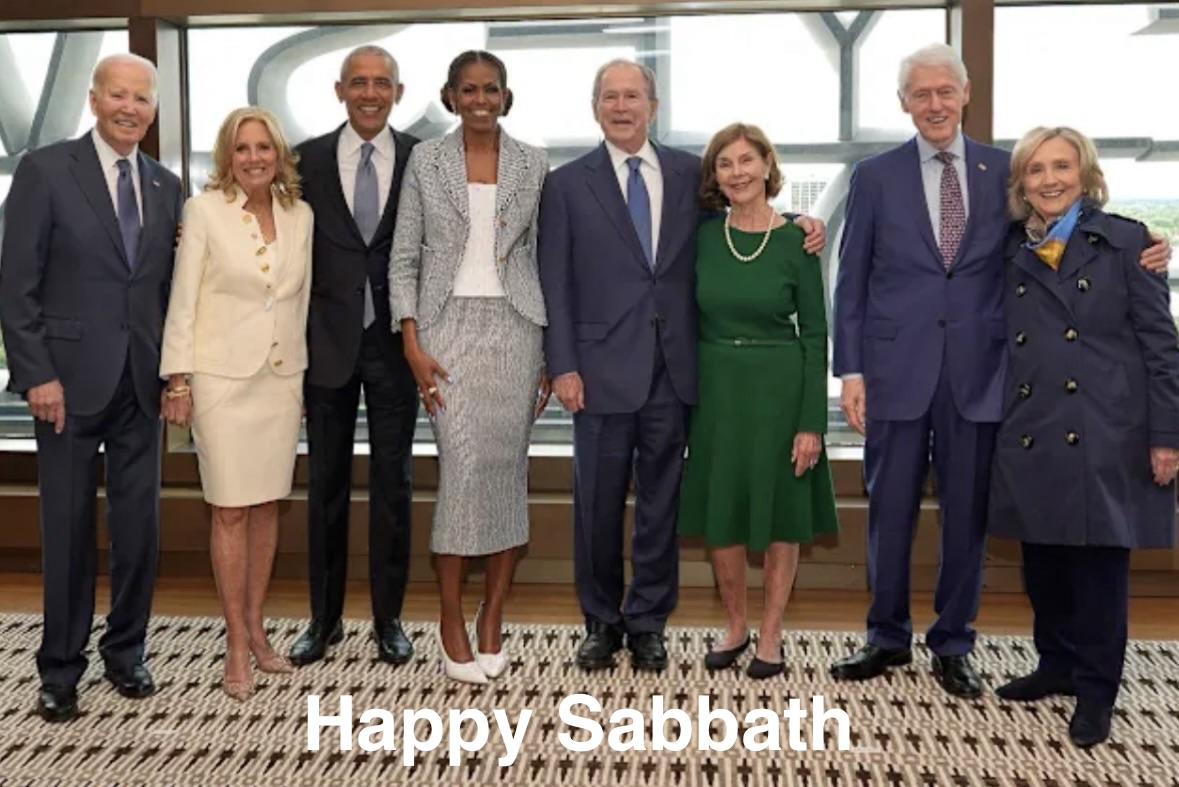
Trump approval on Iran low even as tentative deal to end fighting emerged Most Americans continue to disapprove of how President Donald Trump is handling Iran, according to a new AP-NORC poll that was conducted as Trump suggested a deal with Iran had been reached. Read more. What to know: Trump’s overall job approval stands at 37%, unchanged from an AP-NORC poll conducted in May. Americans’ views on how the president is handling Iran are roughly in line with that. About one-third of U.S. adults approve of Trump’s approach to the economy. That’s in line with last month, and continues a challenging stretch for Trump on the issue. RELATED COVERAGE ➤ Gas prices dip below $4 for 1st time since March but remain 25% higher than last year Vance’s push to get Iran talks started hits an early bump as weekend negotiations are put on hold Israeli military strikes in southern Lebanon in intense fighting as US-Iran talks postponed JD Vance slams Israeli officials who criticized Iran deal, deepening rift between allies Some GOP senators and Trump allies have harsh reviews of his agreement to end Iran war Freed Israeli hostage Guy Gilboa-Dalal recounts sexual abuse in Gaza, urges victims to speak out Senators seek to block Hegseth travel funds until Pentagon releases report on Iran school strike Trump presents the Medal of Honor to 3 veterans for heroism in Vietnam and Afghanistan Senator urges FAA to reject any pressure from Trump to approve triumphal arch over aviation safety Democrats say money from Trump’s tax cuts bill is paying for White House ballroom project Trump from ‘hunted’ to ‘hunter’: New book details Trump’s push to test the limits of executive power Trump administration can replace Washington slavery exhibit in Philadelphia, appeals court says Obama Center opens in Chicago with a call to defend democracy and a celebrity crowd Photos of the Obama Presidential Center opening -
The New York Times
phkrause replied to phkrause's topic in Politics (Mainly US) and other American interest items
June 19, 2026 By Sam Sifton Good morning. The preliminary deal to end the war between the United States and Iran is on the rocks. Switzerland said talks there had been postponed, and Israel struck in Lebanon again. Read the latest news. And it’s Juneteenth, a day of celebration and a day to consider Shirley Chisholm’s admonition not to measure America by its achievement, but by its potential. If you’re off work for the holiday, I’ve got some ideas for what to eat and drink. But we’re going to start with the war between Russia and Ukraine. via Reuters; Agence France-Presse — Getty Images Fear factor Ukraine struck Moscow yesterday with a furious drone attack that appeared to be the largest of its kind in the more than four years since the war began. President Volodymyr Zelensky of Ukraine was clear about its intent. “If Ukraine burns, then your Moscow will burn as well,” he said. The strikes destroyed an oil refinery, filling the skies with greasy, toxic smoke. They shuttered four airports. They closed down part of the highway that rings the city, which is home to 13 million people. The objective, my colleagues Paul Sonne and Nataliya Vasilyeva said, was to bring the war home for Russians who live far from the front lines of eastern Ukraine. The attack “seemed likely to feed fears among Russians that the Kremlin’s ability to isolate society from the impacts of the war was sharply eroding,” they wrote. The effects are mounting. Ukrainian drone attacks on other refineries have led to lines and rationing at gas stations across Russia. The war has started to take its toll on the Russian economy, too. It has now run longer than World War I. Russia is pounding Ukraine as well. Earlier this week it bombarded Kyiv, the capital, leaving a historic cathedral at one of Ukraine’s holiest sites in flames, killing five people and injuring 35 others. But the attack on Moscow has made Russian hard-liners apoplectic. They want the Kremlin to deploy the full might of Russia’s military to stop Ukraine from continuing its attacks within the country. “We must strike the enemy mercilessly, without hesitation,” one told the Russian news outlet RTVI. He called on Moscow to “eliminate the entire leadership, destroy all command centers, bring the entire industrial sector to its knees.” Which is a good reminder that this war is far from over, and could get much worse. Paul and Nataliya wrote a terrifying sentence about that: “How much further Russia, which has the world’s largest nuclear stockpile, can go with its conventional arsenal is unclear.” Read their article here. It’s a free link. A FEAST FOR JUNETEENTH Recipes from Nicole Taylor’s cookbook. Kelly Marshall for The New York Times, Jessica Emily Marx for The New York Times Nicole Taylor, who contributes to our Cooking site, wrote a great cookbook a few years ago about Juneteenth, the holiday that heralds the day in 1865 when those enslaved in Texas first learned that they were free, more than two years after Abraham Lincoln signed the Emancipation Proclamation. It’s called “Watermelon and Red Birds” and is worth seeking out. After its publication, Nicole shared a few recipes from the book with us, and I want to share them with you. Maybe you could try her grilled peach and molasses chicken today, with a very green coleslaw with grilled poblanos, and wash it down with watermelon ginger beer? I wouldn’t sneeze at Millie Peartree’s recipe for Charleston red rice to go with it, either. Nor at Nicole’s strawberry slab pie for dessert. Cook, anyway. Make something delicious. The idea is to take a moment to celebrate freedom in all of its bitter sweetness, with good food, family and friends. And not just on Juneteenth, by the way. Here’s Nicole to play us off: Even on the days that are not demarcated as holidays or holy days or special days, we should do special things for ourselves and the ones we hold dear. These small everyday traditions, these molecules of the ordinary, can have power and meaning, if we allow them to. Rituals of leisure and care are as much a testament to what Juneteenth has made possible as voting rights and desegregated buses are. Have a great weekend. Browse more recipes for Juneteenth here. THE LATEST NEWS Iran Peace Deal Nabatieh, southern Lebanon, on Friday. Agence France-Presse — Getty Images Israel launched new strikes in Lebanon following a deadly attack on its soldiers there. Israeli lawmakers and some Republicans in Washington have criticized the initial agreement between Iran and the United States, which throws Iran an economic lifeline while delaying nuclear negotiations. The deal is disastrous for Israel, analysts and officials there say, accomplishing none of the country’s war aims. Vice President JD Vance delivered an unusually direct rebuke to Israeli critics: “Donald J. Trump is the only head of state in the entire world who is sympathetic to the nation of Israel at this moment in time,” Vance said, adding, “If I was in the cabinet of the Israeli government, I might not be attacking the only powerful ally that I have anywhere left in the entire world.” Gulf states, repeatedly targeted by Iranian projectiles, are frustrated that the agreement does not cover Iran’s missiles. Politics A warehouse in Pennsylvania that ICE recently bought for $87 million. Rachel Wisniewski for The New York Times Times Exclusive: ICE, which spent $700 million on seven warehouses to hold detained immigrants, now wants to get rid of those purchases. The Trump administration backed off a plan to remove hundreds of ocean monitoring instruments, which are critical for studying climate change. The Supreme Court, siding with a recreational marijuana user in Texas, narrowed a law that bars drug users from owning guns. The Trump administration gave a no-bid contract to clean the Lincoln Memorial Reflecting Pool’s water to a firm tied to a political donor, records show. The Obama Presidential Center, on the South Side of Chicago, finally opened. Barack Obama cried during Michelle’s speech. (And several guests, including Stephen Colbert, wore tan suits.) Around the World Andy Burnham Oli Scarff/Agence France-Presse — Getty Images Britain: Andy Burnham, a popular Labour mayor, won a seat in Parliament. His next job could be prime minister. Niger: Gunmen attacked the main airport for the second time this year. An Al Qaeda-affiliated group claimed responsibility. Afghanistan: The Taliban government barred troops and civil servants from bringing smartphones to work. Those caught disobeying will have their phones smashed. Education New tools allow students to cheat in ways their makers say teachers and A.I. detectors can’t trace. Colleges and K-12 schools are struggling to keep up. (This link is free to read.) The Education Department said it would lower federal student loan interest rates by up to one percentage point, citing defaults. In France, a high-school philosophy exam is a rite of passage. See questions. Other Big Stories Nearly 160 service members have fallen ill at Lackland Air Force Base in Texas, officials said, less than two months after the Pentagon made flu vaccines optional. In an abrupt reversal, Luigi Mangione’s lawyers said they no longer intended to argue that he was experiencing “extreme emotional disturbance” at the time he was accused of killing a UnitedHealthcare executive. GO NEW YORK, GO The New York Times Lower Manhattan was a roaring sea of orange and blue yesterday as Knicks fans celebrating the team’s championship jammed along a route known as the Canyon of Heroes. “For as long as we live, we will remember this feeling of a city together, a city alive, a city overcome by happiness,” said Mayor Zohran Mamdani, who rode on a float alongside team members. See more photos from the parade. OPINIONS In The Conversation, Frank Bruni and Bret Stephens discuss Trump’s failure in Iran. New books look back on the Biden presidency. The verdict isn’t pretty, Carlos Lozada writes. (We made this link free for you to read.) Wordle is 5 today. Solve the latest puzzle to earn a celebratory badge. Play now MORNING READS In Nottinghamshire, England. Royal Society for the Protection of Birds Lives Lived: The Major Oak, a centuries-old tree in Sherwood Forest, has died. Its connection to Robin Hood was mythical, but it did outlast the reigns of six Henrys, six Georges and two Elizabeths. Gen Z glop: After years of chaste corporate branding meant to appeal to millennials, consumer products are starting to look a lot gooier. What’s your sleep type? Take our quiz to find out whether you’re a morning person, a night owl or something in between. (We made this link free for you to read.) Your pick: The most clicked story in The Morning yesterday was about the best hidden safes for your home. WORLD CUP Mexico had a 1-0 win over South Korea that clinched the top spot in Group A. The team was booed by its own fans at halftime but got a goal from Luis Romo and a remarkable late save from Raúl Rangel. Canada posted its first win in a men’s World Cup, thrashing Qatar 6-0. Christian Pulisic of the United States may not play against Australia today. He left the team’s World Cup-opening win over Paraguay at halftime. Johan Manzambi helped Switzerland beat Bosnia and Herzegovina 4-1, entering the game near the end of the second half and scoring two goals. NJ Transit spiked its ticket prices for games. The service has run smoothly, but weak sales could worsen the network’s budget deficit. TODAY’S NUMBER 8 — That is the number of players who wear the number 7 on their jerseys who have scored goals in this World Cup so far. Cristiano Ronaldo isn’t one of them. NEXT STATION An illustration of a proposal for Penn Station. via Practice for Architecture and Urbanism “These days we’re seeing a lot of self-congratulatory architecture from occupants of the White House past and present,” writes our architecture critic, Michael Kimmelman. A new federal plan to rebuild Penn Station in New York, he continues, “recalls an era when civic space and public-spirited architecture was a national priority and a democratic symbol expressed in America’s infrastructure projects.” There’s hope! More on culture “Toy Story 5” arrives today. Manohla Dargis has our review: “Time has predictably taken its toll.” Still, it’s Buzz and Woody. Will see. Casa de Estrogen was an apartment building in Los Angeles’s Koreatown that became a haven for queer, feminist art during the 1990s. T Magazine compiled an oral history of the punky scene. Late night hosts joked about the Iran deal, calling it “the retreaty of Versailles.” THE MORNING RECOMMENDS Enter the wayback machine and read Anthony Doerr’s 2014 novel “All the Light We Cannot See.” The Times loved it then and I love it still. Bask in the sun today. It’ll make you happier and healthier. (Apply sunscreen, obvs.) ☀️ Send your kids back to your youth this summer, with old-school tech chosen by the nostalgists at Wirecutter. Walkie-talkies! Instant cameras! An actual record player! It’ll get them off their screens. Take our news quiz. GAMES Here is today’s Spelling Bee. Yesterday’s pangrams were toxified and detoxified. And here are today’s Mini Crossword, Wordle, Connections, Crossplay and Strands. Thanks for spending part of your morning with The Times and me. See you tomorrow. — Sam Sign up here to get this newsletter in your inbox. Reach our team at themorning@nytimes.com. Host: Sam Sifton Editor: Adam B. Kushner News Editor: Tom Wright-Piersanti Associate Editor: Lauren Jackson News Staff: Evan Gorelick, Brent Lewis, Lara McCoy, Karl Russell Saturday Writer: Melissa Kirsch Editorial Director, Newsletters: Jodi Rudoren -
Juneteenth
phkrause replied to phkrause's topic in Politics (Mainly US) and other American interest items
5 Reasons All Christians Should Celebrate Juneteenth Juneteenth serves not only as a day of remembrance, it is also a platform for reflection and dialogue about the struggle for racial equality that still exists in our nation 160 years later. This holiday serves as an opportunity to expand... https://www.crosswalk.com/special-coverage/america/5-reasons-all-christians-should-celebrate-juneteenth.html? -

Think you're eating healthy? You may be missing this heart-protecting nutrient
Asia Joe replied to Asia Joe's topic in Townhall
It was not part of that study. However, coffee is widely promoted as beneficial in many top health YouTube channels. If you put this into the search engine, "study on coffee" you will get article after article talking about health benefits of coffee. The Seventh-day Adventists are the only people I know warning about the dangers of coffee. When I was in business in Mich, I had a client who told me he was addicted to Coffee. He could not break it. He said it was the worst addiction in the world. -
 phkrause reacted to a post in a topic:
Here's your (not so) totally useless fact(s) of the day:
phkrause reacted to a post in a topic:
Here's your (not so) totally useless fact(s) of the day:
-
This Day in History
phkrause replied to phkrause's topic in Word of the Day (and other daily nuggets)
THIS DAY IN HISTORY June 19 1865 Abolition of slavery announced in Texas on “Juneteenth” In what is now known as Juneteenth, on June 19, 1865, Union soldiers arrive in Galveston, Texas with news that the Civil War is over and slavery in the United States is abolished. read more Sponsored Content by REVCONTENT 19th Century 1867 Emperor of Mexico executed 1868 Father De Smet talks peace with Sitting Bull 1960s 1953 Julius and Ethel Rosenberg executed for espionage 21st Century 2006 Construction on Global Seed Vault begins 2014 Felipe VI becomes king of Spain after Juan Carlos I abdicates Arts & Entertainment 2013 James Gandolfini, TV’s Tony Soprano, dies at 51 1971 Carole King has her first #1 hit as a performer 1905 Pioneering Nickelodeon theater opens Asian American, Native Hawaiian & Pacific Islander History 1982 Vincent Chin fatally beaten Black History 1968 “Solidarity Day” rally at Resurrection City Civil War 1864 USS Kearsarge sinks CSS Alabama Crime 1892 Siblings’ murder becomes first crime solved with fingerprint evidence Sports 2005 Controversy at U.S. Grand Prix U.S. Government and Politics 1856 First Republican national convention ends World War II 1944 In Battle of the Philippine Sea, U.S. cripples Japanese naval air power -

Here's your (not so) totally useless fact(s) of the day:
Rahab replied to phkrause's topic in Word of the Day (and other daily nuggets)
-
 Rahab reacted to a post in a topic:
Gene Shalit
Rahab reacted to a post in a topic:
Gene Shalit
-
Rahab reacted to a post in a topic:
Walt Parazaider
-
Rahab reacted to a post in a topic:
Recalls
-
Rahab reacted to a post in a topic:
This giant tropical fruit could help reverse gum disease damage !
-
Rahab reacted to a post in a topic:
Humans may have hidden regenerative powers
-
Rahab reacted to a post in a topic:
Regrowing Human Teeth: The Revolutionary Breakthrough That Could End Dental Implants
- Today
-
 Rahab reacted to a post in a topic:
Your Brain Can Keep Improving Into Your 90s, Study Finds
Rahab reacted to a post in a topic:
Your Brain Can Keep Improving Into Your 90s, Study Finds
-
Rahab reacted to a post in a topic:
The forgotten organ that could predict how long you live
-
Think you're eating healthy? You may be missing this heart-protecting nutrient
Rahab replied to Asia Joe's topic in Townhall
What about the caffeine? -
Juneteenth
phkrause replied to phkrause's topic in Politics (Mainly US) and other American interest items
Juneteenth's resilience Photo illustration: Sarah Grillo/Axios. Photos: Sarah Reingewirtz/MediaNews Group/Los Angeles Daily News, Bastiaan Slabbers/NurPhoto, and Tayfun Coskun/Anadolu via Getty Images Juneteenth is surviving the DEI backlash, even as American institutions pull back from the promises that helped elevate it. Why it matters: The holiday's staying power shows how Black history can be absorbed into calendars, payroll systems and public rituals even as the post-2020 commitments that gave it renewed force are renamed, narrowed or abandoned, Axios' Russell Contreras writes. Keep reading. -
Business & Media Markets
phkrause replied to phkrause's topic in Politics (Mainly US) and other American interest items
🎰 Stat du jour Illustration: Sarah Grillo/Axios. Stock: Getty Images Kalshi, the prediction market platform, is generating more than $2 billion in annualized revenue — triple its November run rate — as NBA Finals and World Cup bets juice trading volume, The Information's Yueqi Yang reports ($). What to watch: The fast growth has sparked early conversations between Kalshi's top executives and investment banks about going public. -

-
Rahab reacted to a post in a topic:
Great Photo Shots!
-
Longevity medicine's do-or-die moment Illustration: Aïda Amer/Axios. Stock: Getty Images The world's first human trial of whether a drug can essentially make a person's cells younger is underway, Axios' Caitlin Owens reports. 🔬 Catch up quick: "Cellular reprogramming" for longevity centers on the concept that aging is a biological process that can be altered therapeutically, just like thousands of other such processes. This early-stage clinical trial will signal whether it can be performed safely in humans, a prerequisite for any future claim that a treatment can slow or even reverse biological aging. Driving the news: The first person in the clinical trial was treated last week with an experimental gene therapy for eye disorders including glaucoma, which can cause blindness. The therapy targets three genes that can "partially reprogram" old cells, and in this case aims to restore function in neurons connecting the eye to the brain. Read on.
-
The Housing Market and Home Ownership
phkrause replied to phkrause's topic in Politics (Mainly US) and other American interest items
🏡 Priced out Data: Harvard Joint Center for Housing Studies tabulations of Freddie Mac, Primary Mortgage Market Surveys, National Association of Realtors, Existing Home Sales, Moody's Analytics estimates. Chart: Emily Peck/Axios Americans are being thwarted by homeownership costs that are near record highs, Axios' Emily Peck writes from a new report out of the Joint Center for Housing Studies at Harvard. Why it matters: Homeownership is a cornerstone of the American Dream, but it is increasingly out of reach — particularly for young adults. 📈 The monthly cost of a median-priced home was $3,120 in the fourth quarter of 2025, per the Harvard report. That includes a mortgage payment, insurance and property tax. It's a roughly 46% increase from the same time in 2019. Stunning stat: In a growing number of cities, a so-called starter home can now run $1 million, a recent Zillow report noted. The homeownership rate in the U.S. fell in 2025 for a second consecutive year. The largest decrease was among those under age 35. Read on. -
⏳ Vance postpones Iran talks trip Vice President JD Vance postponed a planned trip to Switzerland for U.S.-Iran talks expected to begin today. The White House said the reason for the change of plans was "logistics." But there were some indications that the background for the decision is connected to the shaky ceasefire in Lebanon, Axios' Barak Ravid reports. At a press conference yesterday, Vance said the plans for the talks hadn't been finalized and mentioned that Iranian officials might have technical challenges with their travel arrangements. The White House said in a statement: "The U.S. delegation has been prepared to depart at the first available opportunity. But the logistics of these negotiations have never been simple or predictable." Between the lines: A U.S. official said Tehran's claims about alleged Israeli violations of the ceasefire in Lebanon could be the reason for the talks not happening. Israel's military conducted a strike in southern Lebanon on Thursday, killing four people. Last night, before Vance announced he wasn't going, intense fighting between the Israeli military and Hezbollah erupted in southern Lebanon. President Trump wrote on Truth Social that the U.S. "is committed to PEACE" and called on all parties in the region to allow the negotiations "to beautifully unfold." "We expect a complete Ceasefire on all fronts, including Lebanon, Hezbollah, and Israel," he wrote. Go deeper: Trump sees "no limits" to his power.
-
The Axios Show
phkrause replied to phkrause's topic in Politics (Mainly US) and other American interest items
Trump's all-powerful "Great Man" theory President Trump declared on "The Axios Show" yesterday that he's discovered "no limits" to his power since going to war with Iran. A new book reveals he's been entertaining an even grander idea: that he may be the most powerful man in history, Axios' Zachary Basu and Marc Caputo report. Why it matters: Trump is no longer merely testing the limits of the presidency. He's describing power in world-historical terms — placing himself in the lineage of conquerors, dictators and strongmen who bent nations to their will. In a wide-ranging, 45-minute interview yesterday with Axios' Marc Caputo, Trump repeatedly measured power by submission: G7 leaders believed him when he joked "I'm the boss," he said, while Israel has "a lot of respect for me" and will "do as I say." 👀 Zoom in: In "Regime Change," the forthcoming book by Maggie Haberman and Jonathan Swan, Trump proudly shows off a document arguing he's more powerful than Attila the Hun, Genghis Khan, Napoleon, Stalin, Mao and Hitler. Trump "began reading from it," the authors write, "reciting the names of some of history's most powerful figures" and explaining how each "fell short of his own power as U.S. president." "They didn't have airplanes, right? You couldn't travel around," Trump said of Alexander the Great, the Caesars and William the Conqueror. "Napoleon," he added "with relish," according to the authors. Haberman and Swan write that the revealing part was "the evident pleasure he took in the company of Mao, Hitler, and Stalin" — and "the untroubled ease with which he accepted a place among men who had reshaped the world through conquest and fear." 🌐 Zoom out: Hints of that grandiose theory of power surfaced throughout Trump's interview with Axios, hours after returning from what he called a "very dominant" G7 summit in France. Trump named China's Xi Jinping and India's Narendra Modi as the world leaders he most admires, praising Xi as "all business" and Modi as "a very tough cookie." He declined to identify the leaders he considers the weakest — then pivoted to lamenting Vladimir Putin's absence from the G7, which was the G8 prior to Russia's expulsion after its 2014 annexation of Crimea. Trump lingered on French President Emmanuel Macron's decision to honor him with a dinner at Versailles, the kind of imperial stage Trump called "my weakness." Between the lines: Allies, in Trump's telling, are only relevant when they recognize who holds the real power. "If it weren't for me, Israel would not exist today," Trump told Axios, adding that his relationship with Prime Minister Benjamin Netanyahu is "good, but we have to keep him a little bit sane." (Watch a clip about Israel and Netanyahu from the interview.) Trump struck a similar tone toward Republican hawks furious over his Iran deal: "Some guys that I used to respect, I don't respect anymore. They're hardliners," he said. Pressed on why the deal falls short of his original demands, a defiant Trump opted for his own reality — insisting the outcome does, in fact, amount to "unconditional surrender" by Iran as well as "regime change." 📉 Reality check: For all of Trump's claims of limitless power, he acknowledged one force still constrains him — the economy. He argued that extending the war to satisfy hawks could have triggered a "worldwide depression." He pointed to falling oil prices and a surging stock market as proof he made the right decision to back a deal that could end the Iran war. "I have one primary wish as president ... I never want to be the late, great Herbert Hoover," Trump said, referring to the 31st president, who's forever associated with the Great Depression. The bottom line: Trump posted the "Great Men" document on Truth Social yesterday, calling its author a "presidential historian." Haberman and Swan report the author was actually the longtime caddy and personal confidant to golfer Gary Player. The document's conclusion: Trump's willingness to use his power on a global scale "makes him by far the most powerful person that has EVER walked this planet." 📱 Watch a clip from the interview. -
Donald Trump has sweeping plans for a second administration. Here’s what he’s proposed
phkrause replied to phkrause's topic in Politics (Mainly US) and other American interest items
Trump’s $14M Reflecting Pool Disaster Deepens With Record Slime Explosion A Washington Post analysis found the reflecting pool is experiencing its worst algae bloom in years. President Donald Trump’s controversial $14 million overhaul of the White House’s reflecting pool has hit another setback, as officials battle a record outbreak of algae. A Washington Post analysis found that the reflecting pool now contains more algae than at any point recorded in June over the past five years. The study also noted algae levels were among the highest seen in any month over the last two years. Trump said the Lincoln Memorial Reflecting Pool, which was renovated at a cost of around $13.1 million ahead of the 250th anniversary celebrations, would be refilled and repainted a shade of “American Flag Blue,” and pledged to overhaul what he described as the “filthy” and “disgusting” water in the Reflecting Pool. After the pool was refilled on June 4, he hailed its “clean, beautiful water.” But the pool started to turn green with algae less than 24 hours after the renovations were completed earlier this month.Experts say the spike in algae is consistent with seasonal conditions, as hot, sunny weather in the Washington area creates an ideal environment for algae growth. “We would expect June to have more algae naturally than February, March or April because there is more light availability and higher temperatures,” Alana Menendez, a postdoctoral researcher at the University of Virginia’s Department of Environmental Sciences, told the Washington Post. The D.C. region experienced a heat wave as the pool was being refilled earlier this month. Trump administration officials, however, blamed the problem on residual material left in supply lines that had reportedly been dormant for weeks. The Interior Department has also linked the issue to an Obama-era renovation, saying the more than $30 million 2012 overhaul “resulted in massive algae clumps taking over the pool’s surface following years of construction that cost taxpayers millions upon millions only to be broken and disgusting days later.” But critics questioned whether recent changes may be contributing to the problem. One National Parks Conservation Association official suggested the darker paint color could be raising water temperatures and worsening algae growth, telling the Post: “These are all questions that would normally be answered during that review process that just was not done in this case.” Elsewhere, a resident of Alexandria, Virginia, told The Daily Beast the reflecting pool is “a mess” and said they have “never seen it this green before.” “I think it’s a waste of our tax dollars,” said James, who declined to give his surname and has lived in the D.C. area for decades. The Daily Beast has contacted the White House for comment. https://www.thedailybeast.com/trumps-14m-reflecting-pool-disaster-deepens-with-record-slime-explosion/? -
Scientists propose a radical new theory for how life began on Earth !!!!
Asia Joe posted a topic in Townhall
One of the biggest questions in science is how life first emerged on Earth. Researchers generally agree that the appearance of the first biopolymers and their building blocks marked a critical step in the origin of life (OoL). However, scientists still do not know exactly how a collection of prehistoric inert chemicals (gases) transformed into the first living systems. The mystery remains difficult to solve because the full sequence of events that led to life is impossible to observe directly and extremely challenging to recreate. Over the past century, scientists have proposed numerous hypotheses, most of them centered on chemical evolution occurring either on Earth or in space. Yet each explanation has limitations, often relying on specific experimental findings and/or theoretical assumptions. Several well known models have attempted to explain the (terrestrial) chemical OoL, including the Metabolism-first world (FeS world), Zinc world, Thioester world, RNA world, and Lipid world. While each provides valuable insights, none offers a complete explanation of how life emerged from nonliving matter. No single theory has successfully integrated all aspects of the process into a unified and convincing scenario. A New Framework Built Around Nanozymes To address this challenge, Prof. Yongdong Jin of the School of Biomedical Engineering at Shenzhen University in China has proposed the "nanozymes hypothesis" for the OoL on Earth. The hypothesis suggests that primitive natural mineral nanozymes (MN-zymes), along with later generations of organic small molecule hybridized nanozymes, played a central role in the emergence and evolution of life. According to this idea, these materials were especially important during the earliest stages of life's development, helping generate the first biologically relevant molecules from nonliving substances. Under primitive Earth conditions, MN-zymes may have gradually converted prehistoric inert chemicals (gases) into increasingly complex molecules through a combination of chemical (and physical) processes. The author proposes that this transformation occurred primarily through a process described as "inorganic photosynthesis." Multiple Roles in Early Chemical Evolution The nanozymes hypothesis assigns several important functions to natural MN-zymes. These include (a) catalysis, (b) surface binding/confinement, (c) anti-UV irradiation, (d) (photo-)selection, and (e) energy flow management. https://www.sciencedaily.com/releases/2026/06/260610003054.htm -------------------------------------------------------------------------------------- You mean the story about the lightning starting life is untrue? According to science? I'm shocked to hear that! Even the scientists know it was a fairy tale. -
Researchers at Mass General Brigham have uncovered evidence that the thymus, a small immune system organ long thought to lose its importance after childhood, may play a major role in adult health. Two new studies found that adults with healthier thymuses were more likely to live longer and less likely to develop serious diseases. The research also suggests that thymic health may influence how well cancer patients respond to immunotherapy. The findings were published in two papers in the same issue of Nature and challenge decades of assumptions about the thymus. The results indicate that the organ remains important throughout adulthood and could eventually help guide disease prevention strategies and cancer treatment decisions. "The thymus has been overlooked for decades and may be a missing piece in explaining why people age differently, and why cancer treatments fail in some patients," said Hugo Aerts, PhD, corresponding author on the papers and director of the Artificial Intelligence in Medicine (AIM) Program at Mass General Brigham. "Our findings suggest thymic health deserves much more attention and may open new avenues for understanding how to protect the immune system as we age." What the Thymus Does Located in the chest, the thymus helps train T cells, a type of immune cell that helps defend the body against infections and disease. Because the organ gradually shrinks after puberty and produces fewer new T cells over time, many scientists assumed it played only a limited role in adult health. As a result, the thymus has received relatively little attention in large population studies. Earlier research connected T cell diversity to aging and declining immune function, but those studies were typically small and focused on blood samples. The new research took a much broader approach. Investigators analyzed data from more than 25,000 adults participating in a national lung cancer screening trial, along with more than 2,500 people enrolled in the Framingham Heart Study, a long-running study that tracks the health of generally healthy adults. https://www.sciencedaily.com/releases/2026/06/260601025352.htm
-
- 1
-
-
A new three-year study from researchers at The University of Texas at Dallas' Center for BrainHealth (CBH) suggests that getting older does not automatically mean losing mental sharpness. Instead, the findings indicate that brain health and cognitive abilities can continue to improve throughout life. The research, published in Scientific Reports, a Nature journal, draws on data from The BrainHealth Project (BHP), an initiative launched by CBH in 2020 to better understand how people can strengthen and optimize brain health across the lifespan. Researchers tracked 3,966 adults ranging in age from 19 to 94. This group represented roughly one-fifth of all BrainHealth Project participants. Over the course of three years, participants completed brief training activities that required only five to 15 minutes per day. BrainHealth Index Tracks Changes Over Time To evaluate changes in brain health and performance, the team used the BrainHealth Index (BHI), a patent-pending assessment developed by CBH researchers and first introduced in a 2021 pilot study. The BHI is designed to detect both improvements and declines in brain health. It measures three primary areas: clarity, emotional balance, and connectedness to people and purpose. "The BrainHealth Index brings together about 20 metrics, including validated gold-standard measures like the Pittsburgh Sleep Quality Index and the Oxford Happiness Questionnaire, as well as tasks designed at the Center for BrainHealth to focus on more complex thinking skills," said Lori Cook MS'02, PhD'09, CBH director of clinical research and corresponding author of the Scientific Reports study. "This battery of assessments produces insights into individual brain health and change over time. Progress is measured by comparing results with participants' own earlier scores." Cook, who also serves as an adjunct assistant professor in the School of Behavioral and Brain Sciences, said the findings challenge common assumptions about aging and cognition. "Every brain is as unique as a fingerprint and has potential for growth," Cook said. "This study challenges the prevailing narrative of inevitable cognitive decline, suggesting instead that brain health can be proactively cultivated at any age." Brain Improvement Seen Across All Ages According to the researchers, positive changes were observed even among participants in their 80s, showing that efforts to improve brain health can be beneficial long before symptoms or disease appear and can remain effective later in life. "For too long, we've operated under the outdated notion that we need to wait until something bad happens to our brains before we do anything for them," said Sandra Bond Chapman PhD'86, senior author of the study, CBH chief director and Dee Wyly Distinguished University Chair for BrainHealth. "This study reminds us that our brain is not defined by age -- it is defined by possibility." One of the study's most notable findings involved participants who started with the lowest BrainHealth Index scores. This group experienced the largest improvements over time. "Those who are starting at the lowest level appear to have the most opportunity for growth and may be coming in with more preexisting concerns," Cook said. "As such, they may be more motivated to invest the time needed to see more growth potential. But it is noteworthy that we saw measurable growth even in those entering as high performers." https://www.sciencedaily.com/releases/2026/06/260613034222.htm
-
- 1
-
-
Why middle age is becoming a breaking point in the U.S.-- loneliness, stress,
Asia Joe posted a topic in Townhall
For many Americans, middle age is becoming more challenging than it was for previous generations. People born in the 1960s and early 1970s report higher levels of loneliness and depression, along with poorer memory and reduced physical strength compared with those who came before them. What makes this trend especially notable is that it is not happening to the same extent in many other wealthy countries. In several peer nations, particularly in Nordic Europe, health and well-being during midlife have improved over time rather than declined. To understand why the United States appears to be moving in a different direction, psychologist Frank J. Infurna of Arizona State University and his colleagues examined survey data from 17 countries. "The real midlife crisis in America isn't about lifestyle choices or sports cars. It's about juggling work, finances, family, and health amid weakening social supports," Infurna said. "The data make this clear." The study, published in Current Directions in Psychological Science, points to several factors that may be driving these differences and suggests possible ways to improve outcomes. Family Support Policies and Loneliness One key distinction between the United States and many European countries involves support for families. Since the early 2000s, European nations have increased spending on family benefits, while spending in the U.S. has remained largely unchanged. Compared with Europe, the United States offers fewer programs such as cash assistance for families with children, income support during parental leave, and subsidized childcare. These policies can have a meaningful impact on people in midlife, who are often balancing careers while raising children and caring for aging parents. The researchers found that adults in countries with stronger family support systems reported lower levels of loneliness and experienced smaller increases in loneliness over time. In contrast, loneliness among Americans continued to rise across generations. https://www.sciencedaily.com/releases/2026/06/260613215430.htm -
Regrowing Human Teeth: The Revolutionary Breakthrough That Could End Dental Implants
Asia Joe posted a topic in Townhall
For centuries, losing human teeth meant living with a permanent gap in your smile or relying on artificial replacements. But a groundbreaking discovery by Japanese researchers could change this reality forever, offering the possibility of naturally regrowing teeth where they’ve been lost. Led by Dr. Katsu Takahashi at Kyoto University Graduate School of Medicine, scientists have developed a drug that could stimulate the body to grow new teeth—a breakthrough that might one day make dental implants and dentures a thing of the past. https://japandaily.jp/regrowing-human-teeth-ending-dental-implants/ -------------------------------------------------------------------------------------------------------------------- Tooth regeneration therapy enters first human clinical trials in Japan Synopsis A groundbreaking human trial in Japan is exploring a revolutionary treatment to regrow teeth. Researchers have identified a way to activate dormant tooth buds, potentially offering a natural solution for tooth loss. Early results are promising, with a drug aiming for a 2030 release, heralding a new era in dental care. In Japan researchers have taken the first step of their kind by starting the first-ever human trial in a treatment that aims to help grow teeth. In May 2026, the trial is progressing with a cautious optimism, and are aiming to release the drug in 2030. Many people across the globe are who suffer from teeth loss as a result of the effects of aging, injury or genetics, this breakthrough can revolutionize dental treatment. Read more at: https://economictimes.indiatimes.com/news/international/us/japanese-scientists-begin-human-trials-for-tooth-regrowth-drug/articleshow/130710567.cms?utm_source=contentofinterest&utm_medium=text&utm_campaign=cppst-
- 1
-