Leaderboard


Popular Content
Showing content with the highest reputation on 11/26/2014 in all areas
-

Are we using the right exegesis in the church for determining womens ordination?
Woody reacted to Kevin H for a topic
I seem to be getting only the introduction to the article and not the full article unless it is very short and does not give any details. Anyway, I find it interesting that Miller's exegesis was to study the text and the history to see how the text fit. Ford's exegesis was to study the text and see how the text was understood by people living in the dark ages and the dawn of the Reformation. Now with Women's ordination, while there are some who are just liberals and pushing the liberal agenda and I do not have much sympathy for them we are also finding a similar debate as with 1844. You have those of us who are turning to the text and to the historical context of the text and they see the text as supporting women's ordination and sees that it was ideas such as Jesus Ben Sirach from the Second Century BC which changed the Old Testament level of women to what those opposed to Women's ordination believe, and you have those who opposes women's ordination who are looking at how the texts were interpreted by those who followed Jesus Ben Sirach and the Papacy when it down graded women to the same level. They complain about Desmond Ford's methods, but when it comes to opposing Women's Ordination they are using Ford's methods and rejecting Miller's methods.1 point -

Yackety-Yak in Yiddisch
phkrause reacted to aka for a topic
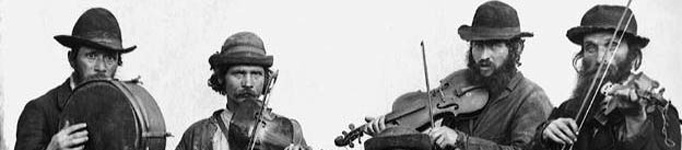
Judaism 101: Yiddish Language and Culture http://www.jewfaq.org/yiddish.htm The Yiddish Language Yiddish was at one time the international language of Ashkenazic Jews (the Jews of Central and Eastern Europe and their descendants). A hybrid of Hebrew and medieval German, Yiddish takes about three-quarters of its vocabulary from German, but borrows words liberally from Hebrew and many other languages from the many lands where Ashkenazic Jews have lived. It has a grammatical structure all its own, and is written in an alphabet based on Hebrew characters. Scholars and universities classify Yiddish as a Germanic language, though some have questioned that classification. Yiddish was never a part of Sephardic Jewish culture (the culture of the Jews of Spain, Portugal, the Balkans, North Africa and the Middle East). They had their own international language known as Ladino or Judesmo, which is a hybrid of medieval Spanish and Hebrew in much the same way that Yiddish combines German and Hebrew. Today, less than a quarter of a million people in the United States speak Yiddish, about half of them in New York. The word "Yiddish" is the Yiddish word for "Jewish," so it is technically correct to refer to the Yiddish language as "Jewish" (though it is never correct to refer to Hebrew as "Jewish"). At the turn of the century, American Jews routinely referred to the Yiddish language as "Jewish". However, that usage has become unfashionable in recent years and people are likely to think you are either ignorant or bigoted if you refer to any language as "Jewish." Likewise, the Yiddish word "Yid" simply means "Jew" and is not offensive if used while speaking Yiddish or in a conversation liberally sprinkled with Yiddish terms, but I wouldn't recommend using the word in English because it has been used as an offensive term for far too long. Often there is no English word that can convey the depth and precision of meaning that the Yiddish word can. Yiddish is a language full of humor and irony, expressing subtle distinctions of human character that other cultures barely recognize let alone put into words. What other language distinguishes between a shlemiel (a person who suffers due to his own poor choices or actions), a shlimazl (a person who suffers through no fault of his own) and a nebech (a person who suffers because he makes other people's problems his own). An old joke explains the distinction: a shlemiel spills his soup, it falls on the shlimazl, and the nebech cleans it up! Perhaps the Yiddish writer best known to Americans is Solomon Rabinovitch, who wrote under the name Sholem Aleichem (a Yiddish greeting meaning, "peace be upon you!"). Sholem Aleichem was a contemporary of Mark Twain and is often referred to as "the Jewish Mark Twain," although legend has it that Mark Twain, upon meeting Sholem Aleichem, described himself as "the American Sholem Aleichem"! Americans know Sholem Aleichem for his tales of Tevye the milkman and his daughters, which were adapted into the musical Fiddler on the Roof. How true is the musical to the stories? Based on my readings of the stories, I would say that Fiddler is a faithful adaptation of the plotlines of the Tevye stories, but the theme of "tradition" that pervades the musical is artificially imposed on the material. The stories certainly turn on the tension between the old world and the modern world, but Tevye's objections to his daughters' marriages are not merely because of tradition. For example, in the original stories, Tevye opposes Hodel's marriage to Ferfel not so much because of tradition, but because Ferfel is being sent to prison for his socialist political activities! Also, there is no fiddler in Sholem Aleichem's stories. 1 point
-
Is There Such A Thing As A Pure Seventh-day Adventist?
lazarus reacted to Kevin H for a topic
When the community of Washington was being incorporated, the members could not agree on what their church should be. Some wanted a very orthodox church with people preaching who toed the party line. Others wanted a church where anyone who felt that they had a message was free to preach and the members could make up their own minds and be free to worship according to the dictates of their conscience. Therefore they decided to have two churches. One with set beliefs and one where people could listen and make their own set of beliefs based on their understanding of the evidence. While there may have been churches in Seventh-day Baptist communities that may actually have been Adventists keeping the Sabbath prior Washington NH, the dates of their start has been lost and we consider the Washington NH church which allowed a wide range of beliefs to be the first Seventh-day Adventist Church. Then our pioneers came from many backgrounds. What they had in common was that they were kicked out of their churches for their belief in the Advent, and they wanted to form a church where they were free to worship as their conscience dictated without being kicked out. They agreed upon a few landmarks, and were against fanaticism. That was the agreement. This unity in diversity is what our pioneers saw as true Adventism.1 point -

Is There Such A Thing As A Pure Seventh-day Adventist?
Liz reacted to Bravus for a topic
Also yes, IMO membership of the SDA club is different and less important than membership of the Jesus club. One can be a member of both, but it's far from inevitable, and there are many people who are members of one but not the other. IMO also, membership of the 'I'm saved' club is even less important, in that it tends to be a bit of a selfish impulse and that it's also not something we can know for sure. Being someone who simply follows Jesus - does as he did, does as he says - will lead to a good life for us and those around us.1 point -
Is There Such A Thing As A Pure Seventh-day Adventist?
Liz reacted to Bravus for a topic
Hi Liz - yeah, I see that point when I'm driving: everyone who drives faster than I choose to is a crazy reckless loon, everyone who drives slower is an over-cautious impediment! (I try to resist these characterisations on my part!) Perhaps we can all be gentler on our 'fanatics' and 'liberals'... realising that their positions are only where they are relative to where we are. Someone who is a 'leftist' in American politics is likely a centrist or rightist in Australian politics and is far to the right in Chinese politics! So perhaps making our own judgements about ourselves, rather than others, is key.1 point -

Are Biblical Prophecies About End-Times Restricted to Middle East?
Woody reacted to JoeMo for a topic
joeb, Like I said in the first post of this thread - it is not a tenet of my belief system that that the Bible was written for Jews; it was an "original thought". Hence, I put it under original thoughts for discussion purposes only; not as a proposed 29th pillar of the SDA faith. Tom W., Sorry for the quote above. Feel free to "edit" my post.1 point