Leaderboard
Popular Content
Showing content with the highest reputation on 09/18/2021 in all areas
-
Soul Sleep before Adventism
GHansen reacted to Gregory Matthews for a topic
There is much information available on the Internet as to the position of Martin Luther on what happens to a person at death. A review of this mass of material will likely lead one to conclude that Luther was not always consistent in his stated belief and also that when he did express belief in the sleep of the soul, his view differed in some ways of the SDA position. I suggest that the following article will be of interest. However, if you read it, read the entire article. A Re-examination of Luther's View on the State of the Dead (andrews.edu):1 point -

ABCs of Yom Kippur
phkrause reacted to JoeMo for a topic
Thank you for the excellent presentation of Yom Kippur! Baruch ata Adonai!1 point -
Internet Conversation on COVID
phkrause reacted to Gregory Matthews for a topic
You may not live in Northern California, but that does not mean that you can not participate: Oct. 2 - Don’t miss the upcoming dialogue between Christians with diverse views, which will be broadcast on the NCC YouTube channel and Facebook page: Finding a Way Forward: Vaccine Mandates & Religious Liberty. Moderated by Steve Allred, NCC religious liberty liaison, the online discussion will feature several physicians and attorneys, along with NCC President Marc Woodson.1 point -

3 word devotional
phkrause reacted to Rahab for a topic
❤️ Gave Himself for us ? Titus 2:14 Who gave himself for us, that he might redeem us from all iniquity, and purify unto himself a peculiar people, zealous of good works.1 point -

Friday Night Devotionals 4 U
phkrause reacted to BlessedMan for a topic
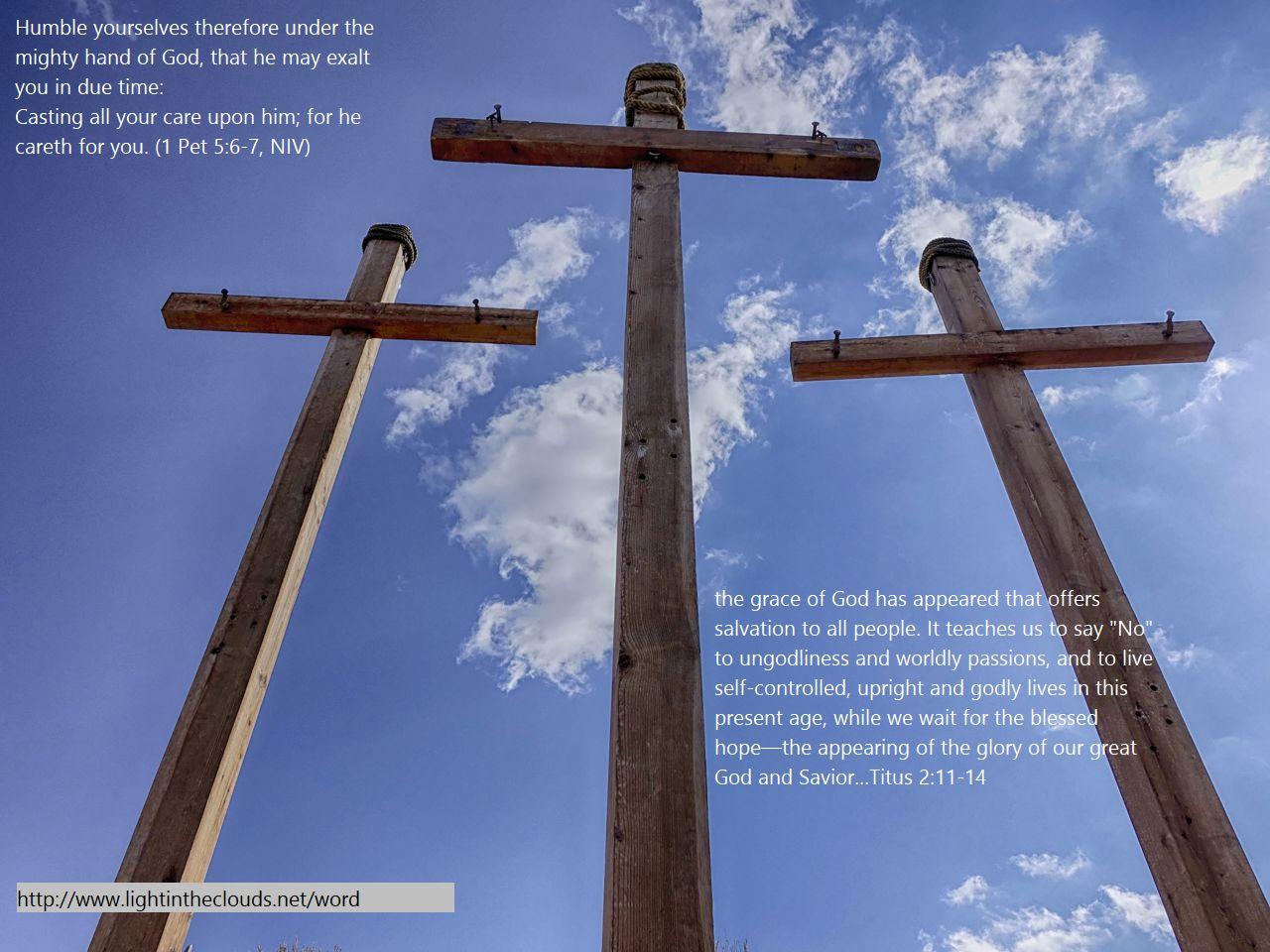
Jesus Is Here The laws of God have their foundation in the most immutable rectitude, and are so framed that they will promote the happiness of those who keep them, as well as draw others to Jesus, the great Law-Giver. He will give rest to your soul, peace in your heart. In quietness and trust, go to Jesus today. Stay with Jesus tomorrow. For the grace of God has appeared that offers salvation to all people. It teaches us to say "No" to ungodliness and worldly passions, and to live self-controlled, upright and godly lives in this present age, while we wait for the blessed hope—the appearing of the glory of our great God and Savior, Jesus Christ, who gave himself for us to redeem us from all wickedness and to purify for himself a people that are his very own, eager to do what is good. (Titus 2: 11-14). In the coming days, some of us may have to make a lot of noise and run really fast, while others will find their way, through being still with God, and just knowing. Him. Whatever your way ends up having to be, Jesus is there. He will be there for you. Jesus will always care. 1 point
-

ABCs of Yom Kippur
JoeMo reacted to phkrause for a topic
Yeshua was the final blood atonement sacrifice that took away mankind's sins. Yom Kippur in the time of Yeshua When the first and second Temples were standing in Jerusalem, the High Priest (Kohen Gadol) would remove his ordinary priestly robes and take a ritual bath, then he would put on special white clothes. After offering the ordinary morning sacrifice, he would offer a young bullock to atone for his own sins, as he could not intercede for the people of Israel until his own sins were atoned for. He would then carry incense into the Holy of Holies, and then return to the altar to get blood from the sacrifice, which he would sprinkle on the lid of the Ark of the Covenant (Mercy Seat) and seven times on the ground in front of the ark. The walls of the Old City where the Temple once stood After this he would sacrifice a goat for the sins of the people, and sprinkle its blood on the ark and in front of it, as he had done with the blood of the bullock. This made atonement for the Holy of Holies. Next, he provided atonement for the tabernacle by sprinkling the blood of both animals on the horns of the altar once, and seven times on the ground around it. This is where it begins to get exciting. . . The Azazel (Scapegoat) - After this, the high priest would go out into the Temple court and lay his hands over the head of the scapegoat, confessing over it the sins of the people of Israel. Then the goat would be taken outside the city and released into the wilderness. This symbolized the removal (carrying away) of the sins from the people of Israel. According to the Talmud, a scarlet cord was tied around the neck of the scapegoat. This cord was reported to have turned white as the goat was led away from the city. The Babylonian Talmud records that for the last forty years before the destruction of the Second Temple in 70 A.D. - that would have been just about the time Yeshua was offered up as the final sacrifice - the scarlet cord around the neck of the scapegoat failed to turn white. In Yeshua, all our sins are carried away “as far as east is from west” (Psalm 103:12). Yeshua is not only our High Priest, but He is also the final sacrifice who has taken away our sins. Because of that, Your Name is Written in the Book of Life. Imagine, if in all the synagogues around the world, the rabbis were discussing the links between the scarlet cord, the scapegoat, and Yeshua. Genesis 12:3 - I will Bless Those who Bless Israel1 point -
3 word devotional
phkrause reacted to Rahab for a topic
? Looking for that blessed hope ? Titus 2:13 Looking for that blessed hope, and the glorious appearing of the great God and our Saviour Jesus Christ;1 point -
Will Religious Org. Be Required To Force Employees To Receive Vaccine
phkrause reacted to stinsonmarri for a topic
Oh yes, Afghanistan Biden has some serious flaws. Lives were bombed and lost! However, it amazing that YAHWEH used Biden even though he has some serious problems to get over 120,000 people that includes Americans and other nationalities as well as Afghans. The only President in history. Then he got so more Americans out and the Taliban did it. I am just going to sit back and watch how THE HEAVENLY FATHER continues to move in these last days. HE uses people who show love, kindness and believes in HIM base on their understanding that they know. Our HEAVENLY FATHER had Daniel to speak that HE, not us, sits up kings and sit them down. HE IS in Control. Blessings and prayers!1 point -
ABCs of Yom Kippur
JoeMo reacted to phkrause for a topic
May your name be sealed in the Book of Life for a good year! TODAY is the Holiest Day in Judaism — the day of Atonement! After Kol Nidre Services last night, today is completely quiet in Israel with many people in the synagogues this morning and early afternoon. At mid-afternoon, many people leave the synagogues to rest while still fasting. They will return to their local synagogues a few hours later for additional prayers. Can you imagine MILLIONS of Jewish people in Israel all praying to God at the same time? This is the ONLY day of the year that this happens, and it is Powerful. Jewish men pray wearing their tallit (prayer shawls). Today Is Yom Kippur, the Day of Atonement! Biblically speaking, this day is the holiest of the year. Even many secular Jews who don’t observe other Jewish holidays consider this day, with its themes of atonement and repentance, significant. “It shall be a statute to you forever: in the seventh month, on the tenth day of the month, you shall afflict your souls, and shall do no kind of work, the native-born, or the stranger who lives as a foreigner among you.” (Leviticus 16:29) Jews Praying in the Synagogue on Yom Kippur, by Maurycy Gottlieb, 1878. Yom Kippur (Day of Atonement) is a solemn fast day. On Yom Kippur, for nearly 26 hours, we “afflict our souls” in the following five ways: We don’t eat or drink; We don’t wash; We don’t use lotions or perfumes; We don’t wear leather footwear; and We abstain from marital relations. Despite these prohibitions, the observance of this day is characterized by a sense of peace because of our confidence in our relationship with God and His provision for atonement. Jewish men at the Wailing Wall praying for forgiveness. Last night, before the sun set, the Jewish People gathered in their synagogues to hear the cantor chant Kol Nidre (All Vows) and recite penitential prayers. This morning, they returned to their synagogues for the Morning Prayer service in which several sections of the Torah portion are read. The entire Book of Jonah will be read during the afternoon service. This service concludes shortly before sunset with the Ne’ila (Closing of the Gates) prayer, which is the last moment for repenting before God seals His judgments in His Book. Yom Kippur will end tonight at nightfall with the blowing of the shofar, and we will return home to enjoy a festive meal. Many of us will also begin building our Sukkah for the holiday of Sukkot, which is just four days away. Orthodox Jewish man praying Selichot, Jewish penitential prayers and poems, in preparation for Yom Kippur, at the Western (Wailing) Wall in Jerusalem. Yom Kippur During Temple Times “Tell your brother Aaron that he is not to come whenever he chooses into the Most Holy Place behind the curtain in front of the atonement cover on the ark, or else he will die.” (Leviticus 16:2) Yom Kippur was the one day in the year that the Cohen HaGadol (High Priest) could enter the Holy of Holies in order to make atonement for the nation of Israel. Before he could minister before the Lord on this holy day, the high priest first bathed in water (immersed himself in the mikvah) and then put on a special linen tunic. In the Holy of Holies, the high priest was not to wear his usual golden garments, designed for splendor and beauty; instead, he was to wear simple, white linen clothing that represented purity and humility, which befits this most sacred of all days. Many Jewish men wear a kittel, a white robe-like garment, for evening prayers on Yom Kippur. It is also worn on their wedding day. Wearing White on Yom Kippur Today, many religiously observant Jewish men dress in simple, white linen when attending Yom Kippur services. They also wear rubber soled sneakers instead of leather shoes, in remembrance of Yom Kippur’s animal sacrifice. And women will wear elegant dresses while wearing canvas running shoes. The rabbis give another reason for wearing white on this holy day. Israel comes before God, not in drab clothing like a penitent sinner, but arrayed in white as if going to a feast, confident that they will be pardoned as they come in sincere repentance. In the Book of Revelation, we see a connection to the tradition of wearing white and the Book of Life: “He who overcomes shall be clothed in white garments, and I will not blot out his name from the Book of Life, but I will confess his name before My Father and before His angels.” (Revelation 3:5) Kapparot is a ritual some Jews perform before Yom Kippur, where a chicken is waved over the head three times in order to symbolically transfer one's sins to the chicken. The chicken is then slaughtered and donated to the poor. Since the Holy Temple is no longer standing and no sacrifices for sin can be offered, those who know Yeshua (Jesus) can trust in the sacrifice that He made for our atonement. However, 99% of the Jewish People today do NOT believe that Yeshua is the Messiah. And with no Temple in Jerusalem for the past 2,000 years, they have replaced the animal blood sacrifice with prayer (tefilah), repentance (teshuvah), and charity (tzedakah). Perhaps we can give credit to the Ultra-Orthodox Jews who sacrifice chickens in a ritual called kapparot. At least in performing this ritual, they still acknowledge the need for a blood sacrifice (even though this is not the animal prescribed in the Torah for sacrifice). And as we are now in the End Times, perhaps it will make it easier for these Ultra-Orthodox Jews to recognize the atoning sacrifice Yeshua accomplished on our behalf as the Messiah. The Azazel "But the goat chosen by lot as the scapegoat shall be presented alive before the Lord to be used for making atonement by sending it into the desert as a scapegoat." (Leviticus 16:10) On Yom Kippur, the High Priests cast lots for two goats. One was offered as the sacrifice, but the other goat was chosen as the Azazel (the scapegoat). Azazel is a very special Hebrew noun meaning dismissal or entire removal. The entire removal of the sin and guilt of Israel is symbolized by the High Priest laying both his hands on the head of this live goat, confessing over it all the transgressions of the children of Israel. The goat would then be released into the wilderness, thus physically carrying the burden of Israel’s sin into the wasteland. The Golden Gate, which is called Sha'ar HaRachamim (Gate of Mercy) in Hebrew, is located on the eastern side of the Temple Mount. It's thought that the Azazel was led through this gate to the wilderness. It's also thought that Messiah will come through this gate. Suleiman wanted to prevent this and had the gate sealed in 1541. A Muslim cemetery was placed in front of it to defile the area. The Azazel and Messiah Yeshua “He is to lay both hands on the head of the live goat and confess over it all the wickedness and rebellion of the Israelites — all their sins — and put them on the goat’s head. He shall send the goat away into the wilderness in the care of someone appointed for the task. The goat will carry on itself all their sins to a remote place; and the man shall release it in the wilderness.” (Leviticus 16:21–22) There are striking similarities between these verses in Leviticus 16 and those of Isaiah 53: "And the Lord has laid on Him the iniquity of us all… For He shall bear their iniquities…." (Isaiah 53:6, 11) Rabbis of ancient times viewed Isaiah 53 as a Messianic prophecy. Most agreed that it speaks of the Messiah of Israel. Sadly, this Messianic prophecy has been effectively hidden from most Jewish people, even those who faithfully attend synagogue services, by omitting the entire chapter from the Sabbath readings. Why? Maybe because the chapter so perfectly describes the atonement Yeshua made for us through the sacrifice of His own life as the suffering servant. Revealing the Jewish Messiah to the Jewish People through their own Scriptures is why we so desperately need to make the Messianic Prophecy Bible available to them! The current rabbinic interpretation of Isaiah 53 proposes that this passage does not speak of the Messiah but that it speaks of the nation of Israel. This interpretation seems to have gained serious adherents only in the 13th century. In reality, it is a deception that is promoted throughout the Jewish community to blind Jewish people from seeing that Isaiah 53 perfectly describes Yeshua who suffered for our sins. Not all rabbis have agreed with this willfully wrong interpretation. In a strongly worded 14th century commentary, Rabbi Moshe Kohen ibn Crispin said: “[In contrast to those] having inclined after the stubbornness of their own hearts and their own opinion, I am pleased to interpret the parasha [Isaiah 53] in accordance with the teachings of our rabbis, of the King Messiah… and adhere to the literal sense. Thus I shall be free from forced and far-fetched interpretations of which others are guilty.” Similarly, Moses Alshech, a 16th century rabbi, preacher, and Bible commentator said, “Our rabbis with one voice accept and affirm the opinion that the prophet [Isaiah] is here [chapter 53] speaking of the Messiah.” This Siddur (Jewish Prayer Book) is resting on a table at the Western Wall adorned with a velvet tablecloth that is embroidered with an image of the Second Temple. The fringed garment is a folded tallit (prayer shawl). Numerous rabbinic commentators also take for granted that Isaiah 52:13–53:12 refers to the Messiah. The following quotes are gleaned from traditional rabbinic sources: “He, Messiah, shall intercede for man’s sins, and the rebellious, for his sake, shall be forgiven.” (Jerusalem Targum on Isaiah 53:12) “And when Israel is sinful, the Messiah seeks for mercy upon them as it is written, ‘By his stripes we were healed,’ and ‘he carried the sin of many and made intercession for the transgressors.’” (Genesis Rabbah on Isaiah 53:5, 12) In a limited sense, however, Israel has suffered as an azazel "scapegoat" for the nations. Because of the blindness with which Adonai temporarily afflicted Israel with regard to their Messiah, salvation (Yeshua) has come to the Gentiles. "For I do not desire, brethren, that you should be ignorant of this mystery, lest you should be wise in your own opinion, that blindness in part has happened to Israel until the fullness of the Gentiles has come in… and so all Israel shall be saved…. (Romans 11:25–27) An orthodox Jewish man and Israeli soldier pray at the Western (Wailing) Wall. Iniquity and a Lasting Atonement "And the Lord has laid on Him the iniquity [avon] of us all." (Isaiah 53:6) In Hebrew, the word iniquity is avon. This word differs from the Hebrew word for sin (chata) which means to fall short and miss the mark. Avon is rooted in the Hebrew verb avah meaning to twist and to distort. It signifies an inner crookedness or spiritual state of being bent — in other words, perversity, as well as a willful departure from the law (Torah) of God. While the ordinary sacrifices were limited to atoning for involuntary or unintentional sins, this special sacrifice on Yom Kippur atoned for willful sin. The blood of bulls and goats can never fully remove sin and iniquity; it can only cover it for a time. A perfect, absolutely sinless One was required to pay the price for our rebellion and uncleanness. Only Yeshua the Messiah could fulfill this role. As the Messiah, His body and blood are the kapparah (atonement) and korban (sacrificial offering) for our sins. And when He rose on the third day, He revealed the absolute holiness of His life and the effectiveness of His sacrifice on the execution stake for all mankind. Rabbinic tradition states that on Yom Kippur the Cohen (Jewish priest) would tie a scarlet cloth to the horn of the Azazel and that when the sacrifice was fully accepted, the scarlet cloth became white. This wonderfully symbolized God's gracious promise in Isaiah 1:18: “Though your sins are like scarlet, they shall be white as snow.” Rabbi with two Torah scrolls in the Aron Kodesh (Torah ark) in the background. Assurance of Atonement for Sin “Sins overwhelmed me, but You atoned for our transgressions.” (Psalm 65:3) The rabbis recognized that every man is in need of atonement for his sins, for it is written, “There is not a righteous man on earth who does what is right and never sins.” (Ecclesiastes 7:20) A Talmudic story is recorded in which Yohanan ben Zakkai's disciples gather around his deathbed and find him weeping. They ask, “Rabbi, you are the light of Israel, the pillar on which we lean, the hammer that crushes all heresy. Why should you weep?” In answer, the rabbi confesses that he is afraid to die because he is not sure whether he will end up in heaven or hell. Although God has provided atonement for all of our sins through the blood of the Messiah Yeshua, nearly all the Jewish people today are completely unaware of God's Plan of Salvation through the Jewish Messiah. A Jewish man prays at the Western (Wailing) Wall, which is at the base of the Temple Mount in Jerusalem, where the Holy Temple once stood and the High Priest offered the atoning sacrifice on Yom Kippur. During this Holiest Day in Judaism the Jewish People are prayerfully thinking about repentance, forgiveness and atonement. Could there be a better time to contemplate the problem of iniquity and sin, and share how Yeshua (Jesus) fulfilled the Messianic prophecies and became the atoning sacrifice? Make a Difference this Yom Kippur for Eternity, and help us reveal Yeshua as the atonement (kapparah) for the Jew first, and also for the non-Jew. "I am not ashamed of the gospel, because it is the power of God for the salvation of everyone who believes: first for the Jew, then for the Gentile." (Romans 1:16)1 point -
3 word devotional
phkrause reacted to Rahab for a topic
?? Lord is nigh to the brokenhearted ?? Psalm 34:18 The Lord is nigh unto them that are of a broken heart; and saveth such as be of a contrite spirit.1 point